
 English
 русский
 Español
 عربى
عربى

How to Layout Refrigerated Display Cases in Supermarket Fresh Sections
Content
- 1 Why Layout Planning Matters Before You Buy a Single Case
- 2 Understanding the Three Core Store Layout Patterns
- 3 Zone-by-Zone Placement Guide for the Fresh Section
- 4 Matching Case Types to Each Zone
- 5 Temperature Zoning and Food Safety Compliance
- 6 Staff Access and Restocking: The Side of Layout Nobody Talks About
- 7 Energy Efficiency and Long-Term Cost Considerations
A supermarket's fresh section can make or break the entire shopping experience. Customers decide within seconds whether a store feels trustworthy, and the first impression almost always comes from the produce aisle. Yet many store operators invest heavily in equipment while giving almost no thought to placement — and that's where layouts fail. Getting refrigerated display cases in the right positions, matched to the right zones, is what separates a high-performing fresh section from a costly one.
Why Layout Planning Matters Before You Buy a Single Case
Buying refrigerated cases without a layout plan is like furnishing an apartment before measuring the rooms. You'll end up with mismatched zones, poor airflow, and traffic bottlenecks that frustrate both customers and staff. Poor placement directly affects cold-chain integrity: a display case positioned near a heat source, a loading dock entrance, or under direct sunlight will struggle to hold temperature regardless of how powerful its compressor is.
Beyond food safety, layout determines how much product customers actually see — and buy. Studies in retail merchandising consistently show that customers purchase more when they move naturally through a space, encounter products at eye level, and experience a logical progression from category to category. A refrigerated display case in the wrong location doesn't just look out of place; it can actually reduce dwell time and suppress impulse purchases in surrounding areas.
The planning process should start with a scaled floor plan, a clear understanding of your store's traffic patterns, and a category map that defines which fresh zones go where before any equipment is ordered.
Understanding the Three Core Store Layout Patterns
Every supermarket floor plan is a variation of three fundamental layout models. Each one shapes how customers move through the fresh section — and therefore, where refrigerated cases should live.
The grid layout is the most common in traditional supermarkets. Parallel aisles guide customers down predictable paths, making it easy to find specific items. Refrigerated cases in a grid work best along the perimeter walls and at the ends of aisles (endcaps), where they catch traffic naturally without disrupting flow. The downside: grid layouts can feel transactional, so produce and fresh displays near the entrance need extra visual lift to create warmth.
The loop layout (also called racetrack) routes customers along a defined path that circles the store perimeter before cutting through the interior. This is ideal for fresh food because high-value departments — produce, dairy, meat — can be staggered along the loop to guarantee exposure. Refrigerated cases here should face inward toward the path, with unobstructed sightlines drawing customers along the route.
The free-flow layout uses irregular, clustered arrangements to encourage exploration. It works well for specialty and artisan fresh sections but requires more deliberate case placement to prevent confusion. Research on how display chillers influence customer buying behavior confirms that poorly anchored cases in free-flow environments reduce purchase intent — so each case needs a clear visual focal point and logical connection to adjacent categories.
Zone-by-Zone Placement Guide for the Fresh Section
Fresh sections in modern supermarkets are typically divided into four core zones. Each has distinct temperature needs, customer behavior patterns, and traffic characteristics that should drive placement decisions.
Zone 1 — Produce (Entrance Area)
Fresh fruits and vegetables belong at or near the store entrance. Visually, colorful produce sets an immediate tone of freshness and quality. Psychologically, it primes customers to perceive the entire store as fresh — a halo effect that benefits every other department. Open-front air curtain cases and low-profile multi-deck chillers work best here because they allow customers to see and reach product easily without physical barriers. Refrigerated display chillers designed for fruit and vegetable merchandising typically maintain 34–41°F (1–5°C) with high humidity airflow to prevent wilting. Keep produce cases away from entrance doors where hot or cold external air causes temperature swings.
Zone 2 — Dairy (Rear or Side Perimeter Wall)
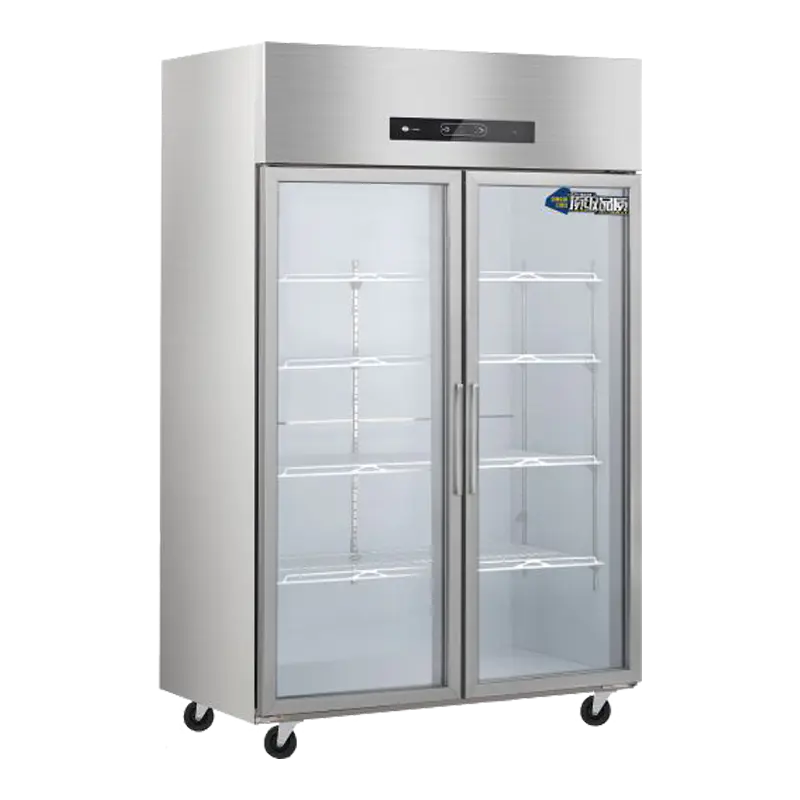
Dairy products — milk, yogurt, butter, eggs — are everyday staples that customers will seek out regardless of placement. That's exactly why they belong at the back or along a side wall: it draws traffic deep into the store, increasing exposure to other departments along the way. Tall glass-door multi-deck chillers are the standard here. They maximize vertical space, reduce energy loss compared to open cases, and allow customers to browse the full range without staff assistance. Ensure at least 1.2–1.5 meters of aisle clearance in front of dairy cases, as these areas attract high dwell time during peak hours.
Zone 3 — Fresh Meat and Seafood (Side Wall or Service Counter)
Meat and seafood require the most precise temperature control and the most staff interaction in the fresh section. Service-style refrigerated cases — low-front, glass-sided units accessible from behind by staff — are the appropriate format here. These are typically positioned along a side wall to allow dedicated counter space for cutting, wrapping, and serving. Fresh meat refrigerated display cases typically operate at 28–34°F (-2–1°C) and must be positioned away from hot food stations, deli grills, or any heat-generating equipment. Adjacency to the seafood counter is logical and efficient for both customers and staff.
Zone 4 — Prepared Foods and Deli (Mid-Floor or Transition Area)
Ready-to-eat and semi-prepared items — deli salads, marinated proteins, grab-and-go meals — occupy the bridge between raw fresh and conventional grocery. Island refrigerated display cases for mid-aisle fresh food merchandising are well suited here: their 360-degree accessibility encourages impulse purchase from all directions, and their central positioning makes them natural stopping points in the customer journey. Position island cases so they don't block sightlines to other departments, and leave a minimum 1.8-meter clearance on all sides for comfortable browsing and restocking.
Matching Case Types to Each Zone
Case type selection should follow zone function — not the other way around. The most common mistake is choosing a case based on aesthetics or price alone, then trying to retrofit it into a zone it wasn't designed for.
| Zone | Recommended Case Type | Key Features to Prioritize |
|---|---|---|
| Produce | Open-front air curtain / Low multi-deck | High humidity airflow, gravity coil, low front height |
| Dairy | Glass door multi-deck | Energy-efficient doors, adjustable shelving, anti-fog glass |
| Meat / Seafood | Service counter / Specialty display case | Low-front glass, precise temperature zoning, rear access |
| Prepared / Deli | Island refrigerated display case | 360° accessibility, curved glass, LED display lighting |
Glass door multi-deck chillers for produce and dairy display are among the highest-impact investments in a fresh section because they simultaneously reduce energy consumption and increase visibility — two goals that usually conflict. Meanwhile, supermarket air curtain refrigerators for open-front fresh displays deliver the touchable, accessible shopping experience that produce customers expect, without sacrificing cold-chain performance.
Temperature Zoning and Food Safety Compliance
Layout planning is inseparable from temperature management. Placing the wrong case in the wrong environment — or grouping incompatible temperature zones — creates silent food safety risks that don't show up until product starts spoiling ahead of schedule.
The fundamental rule: all refrigerated cases holding TCS (Temperature Control for Safety) foods must maintain 41°F (5°C) or below, as mandated by the FDA Food Code. The FDA's guidance on temperature control for perishable retail foods makes clear that even short-term temperature excursions above 5°C increase microbial activity and reduce shelf life measurably.
In practice, this means your layout must account for thermal interference between zones. Avoid placing a high-temperature deli hot bar adjacent to a raw meat service case. Don't run open refrigerated cases directly beneath overhead HVAC vents, which disrupt the air curtain and allow warm air infiltration. And never position any refrigerated display case within direct sunlight from skylights or windows — even indirect solar gain can raise ambient temperature by 3–5°C around the case.
Temperature-specific zoning in display chillers has a measurable impact on both food freshness and merchandising results — a well-zoned layout reduces shrinkage while making the section look fuller and more appealing throughout the day.
Staff Access and Restocking: The Side of Layout Nobody Talks About
Customer-facing layout gets most of the attention, but the operational side of case placement determines whether your fresh section can actually function at scale. A display case that looks perfect from the front but requires staff to carry product 30 meters from the back-of-house is a layout failure — and it shows up in labor costs and product freshness every single day.
The key principle is proximity between storage and display. Walk-in coolers and back-of-house refrigeration should be positioned as close as possible to the fresh cases they supply. For dairy and meat specifically — where restocking frequency is high and cases of product are heavy — this isn't a convenience issue, it's a musculoskeletal injury risk over time.
Where possible, prioritize cases with rear-access doors. This allows staff to restock from the back aisle without stepping into customer space, which is especially important during peak hours. It also supports proper FIFO (First In, First Out) rotation: older stock remains at the front facing customers while fresh stock loads from behind, naturally maintaining product freshness without manual reorganization.
Leave a minimum 90cm service corridor behind all perimeter cases. For island cases, plan a 1.8-meter minimum clearance on all sides. These aren't generous — they're the functional minimum for safe restocking with equipment.
Energy Efficiency and Long-Term Cost Considerations
Refrigeration is typically the largest single energy expense in a supermarket, accounting for 30–50% of total electricity consumption. Layout decisions made at the design stage have a lasting impact on those numbers — and they can't easily be undone once the store is operational.
The biggest energy variable is the choice between open-front and glass-door cases. Open multi-deck cases offer maximum accessibility and visual impact, but glass-door models reduce refrigeration energy consumption significantly — industry figures typically cite 30–40% lower energy use with doors versus without. For the dairy and beverage zones, where customer selection is primarily visual and self-directed, glass-door cases are almost always the smarter long-term investment.
Lighting is the other major factor. LED lighting in refrigerated cases runs cooler than fluorescent, reduces heat load on the refrigeration system, and lasts far longer. Beyond the operational savings, LED lighting renders product colors more accurately — reds in meat cases, greens in produce — which directly supports sales performance. Position lighting to illuminate product faces rather than shelves; top-down lighting creates glare and flattens the visual appeal of packaged goods.
Finally, group cases by refrigeration system type where your layout allows. Cases connected to a centralized remote refrigeration system are more energy-efficient than self-contained units, particularly at supermarket scale. Plan condenser and compressor room placement during the layout stage — retrofitting centralized refrigeration into an existing store is expensive and disruptive.