
 English
 русский
 Español
 عربى
عربى

Commercial Freezer Temperature Zones: When to Choose -18°C, -25°C, or -40°C
Content
- 1 Why Freezer Temperature Selection Is a Business Decision
- 2 -18°C: The Food Safety Standard for Foodservice and Retail
- 3 -25°C: Extended Shelf Life and IQF Food Processing
- 4 -40°C and Below: Ultra-Low Storage for Pharmaceutical and Industrial Use
- 5 Comparison: Choosing the Right Temperature Zone at a Glance
- 6 Key Factors That Should Shape Your Final Temperature Choice
A commercial freezer set to the wrong temperature doesn't just risk a health inspection fail — it quietly erodes product quality, inflates energy bills, and can render an entire batch of pharmaceutical samples worthless overnight. The decision between -18°C, -25°C, and -40°C is not a dial you set once and forget. It is an operational choice with real consequences for food safety compliance, cold chain integrity, and equipment capital costs.
This guide maps each temperature zone to the industries, products, and regulatory frameworks where it belongs — so you can choose the right equipment from the start rather than upgrade under pressure later.
Why Freezer Temperature Selection Is a Business Decision
Most buyers default to whatever the equipment ships with. That approach works until a health inspector flags your walk-in, or a client rejects a shipment because the cold chain fell outside spec. Temperature selection sits at the intersection of three competing pressures: food safety regulation, product quality requirements, and energy cost management.
Going colder than necessary wastes electricity and accelerates compressor wear. Running too warm invites compliance violations and spoilage. Each temperature zone discussed below represents an engineering and commercial trade-off optimized for a specific class of applications. Understanding where those zones begin and end is the first step to specifying the right commercial freezer for your operation.
-18°C: The Food Safety Standard for Foodservice and Retail
The -18°C (0°F) threshold is the global baseline for frozen food storage — and it is not arbitrary. At this temperature, enzymatic activity responsible for food degradation slows to a near halt, and bacterial reproduction ceases entirely. The FDA Refrigerator & Freezer Storage Chart confirms that freezing food at 0°F keeps it safe indefinitely — though quality degrades over time depending on packaging and product type.
This zone covers the vast majority of commercial foodservice and retail applications:
- Restaurants and hotel kitchens storing pre-portioned proteins, frozen vegetables, and prepared meal components
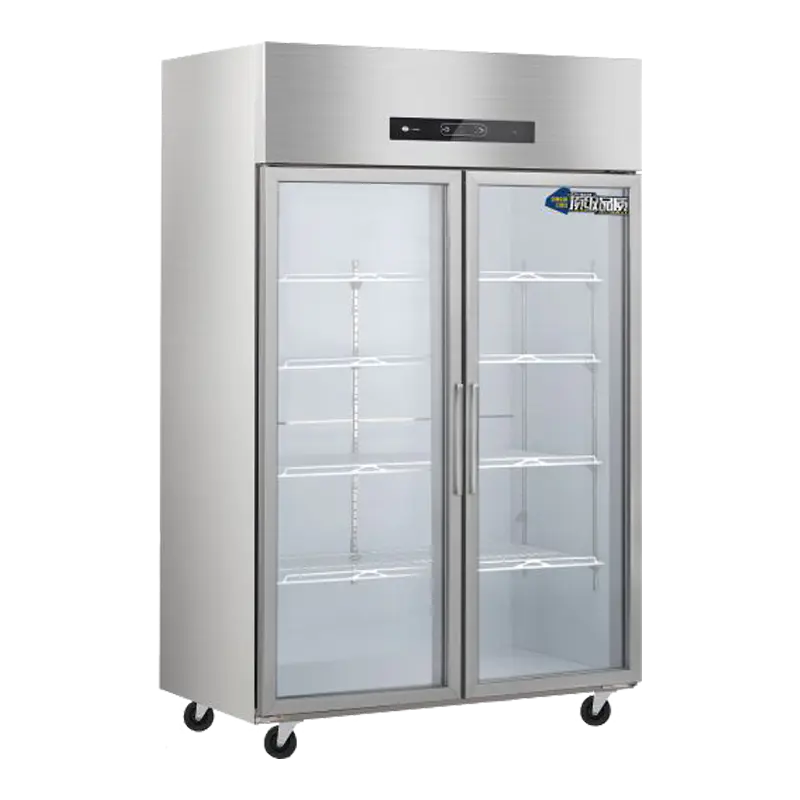
- Grocery and convenience retail displaying packaged frozen goods in reach-in merchandisers
- Food distribution warehouses holding commercially processed frozen products in transit
- Institutional catering (hospitals, schools, stadiums) managing high-volume frozen inventory
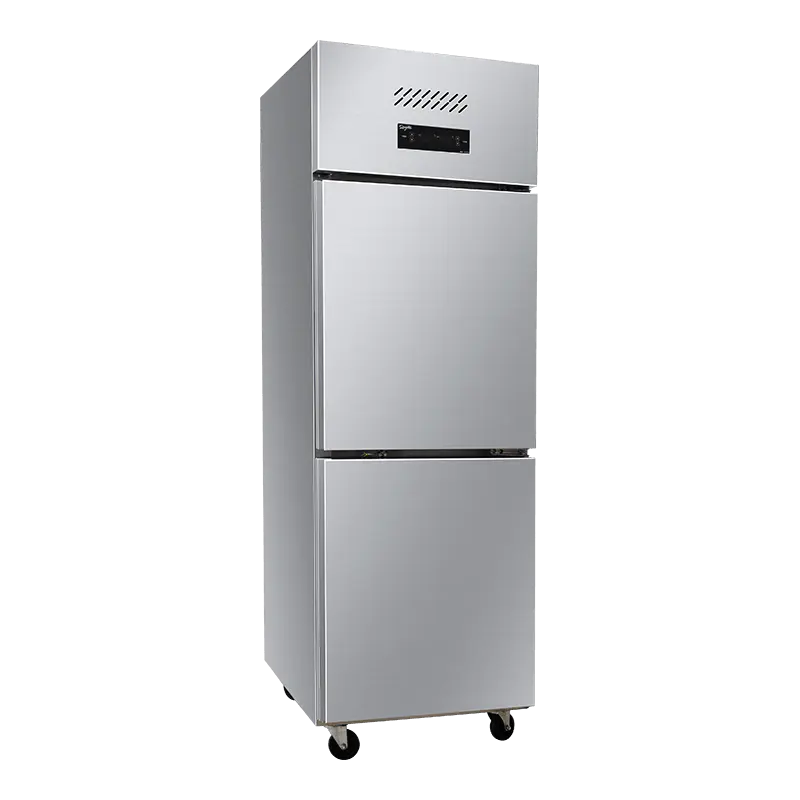
From an equipment standpoint, commercial chest freezers for bulk frozen food storage and standard reach-in upright units are both engineered to hold -18°C reliably. This temperature range is also the most energy-efficient of the three zones, typically operating compressors at moderate load without specialized refrigerant circuits.
One practical note: because door openings in busy kitchens can temporarily push internal temperatures upward, thermostat setpoints are often dialed to -20°C or -21°C to provide a safety buffer. The goal is to ensure the warmest point in the cabinet — usually near the door — never drifts above -18°C.
-25°C: Extended Shelf Life and IQF Food Processing
Drop five or six degrees below the food safety baseline and you enter a different performance tier. -25°C storage is not a regulatory requirement for most foods — it is a quality and logistics decision made by operations that need longer storage windows or superior product integrity upon thaw.
The most common use cases include:
- Individual Quick Freezing (IQF) facilities processing seafood, poultry, and berries, where cell damage during initial freezing must be minimized
- Seafood and premium protein importers warehousing product for months at a time before distribution
- Ice cream manufacturers and distributors, where product hardness and texture consistency depend on maintaining temperatures well below -18°C across the cold chain
- Long-haul cold chain logistics operators running refrigerated containers over extended transit times
At -25°C, ice crystal growth inside food cells is significantly reduced compared to -18°C storage. This translates directly into less drip loss on thawing and better texture retention — factors that matter enormously when a seafood processor is selling premium product on texture grade. The upright reach-in freezers for food service operations at this temperature range require higher-capacity compressors and typically use HFC or HFO refrigerant blends capable of deeper cooling cycles. Energy consumption is noticeably higher — typically 20–35% more than equivalent -18°C units — so the decision to step down to this zone should be justified by the value of the product being stored, not default over-caution.
-40°C and Below: Ultra-Low Storage for Pharmaceutical and Industrial Use
Standard food freezing logic stops applying well before you reach -40°C. At this point, you are no longer talking about restaurant equipment or retail cold cases — you are in the domain of Ultra-Low Temperature (ULT) freezers built for scientific, pharmaceutical, and industrial applications where molecular stability is the primary requirement.
The core applications at -40°C and below include:
- Pharmaceutical manufacturing and distribution, where temperature-sensitive biopharmaceuticals, enzyme compounds, and drug intermediates require storage well below conventional ranges to prevent molecular degradation
- Vaccine cold chains — particularly mRNA vaccines, which require storage at approximately -70°C to -80°C to preserve lipid nanoparticle integrity, as established during global COVID-19 vaccine distribution
- Biobanking and clinical laboratories storing DNA, RNA, cell cultures, blood products, and tissue samples for research use
- Industrial chemical processing, where certain reagents or intermediates must be kept at cryogenic-adjacent temperatures during storage or shipment
ULT units engineered for -40°C to -86°C use cascade refrigeration systems — two independent compression stages working in series — to reach temperatures that a single-stage compressor cannot achieve. This architectural complexity has real cost implications: equipment is significantly more expensive to purchase, and energy draw can be two to three times that of a comparable -18°C unit. For regulated industries, the tradeoff is non-negotiable; for food operators, it rarely is.
A practical boundary worth noting: -40°C is approximately the crossover point between advanced food-grade cold storage and entry-level pharmaceutical ULT equipment. Buyers specifying equipment in this range should clarify whether they need a deep-cycle commercial food freezer or a certified laboratory ULT unit, since the design intent, maintenance protocols, and regulatory documentation requirements differ substantially.
Comparison: Choosing the Right Temperature Zone at a Glance
| Temperature Zone | Typical Industries | Common Products Stored | Regulatory Driver | Relative Energy Cost |
|---|---|---|---|---|
| -18°C (0°F) | Foodservice, grocery retail, institutional catering | Frozen meats, vegetables, prepared meals, dairy | FDA Food Code, local health codes | Baseline (1×) |
| -25°C (-13°F) | Seafood processing, IQF, ice cream, cold chain logistics | Premium seafood, poultry, IQF produce, ice cream | Quality/contractual specifications | Moderate (~1.25–1.35×) |
| -40°C and below | Pharmaceuticals, biomedical research, biobanking | Vaccines, biologics, cell cultures, DNA/RNA samples | FDA 21 CFR, GMP, ICH Q1A stability guidelines | High (~2–3×) |
Key Factors That Should Shape Your Final Temperature Choice
Temperature zone is not the only variable to get right. Several operational factors interact with your target setpoint in ways that can undermine performance if not addressed during equipment selection.
Product type and turnover rate. High-turnover frozen goods in a commercial kitchen do not benefit meaningfully from -25°C storage — and the energy premium is wasted. Reserve colder zones for products with longer hold times or stricter quality tolerances.
Ambient installation environment. A freezer installed in a 35°C kitchen or loading dock operates its compressor harder than the same unit in a climate-controlled warehouse. Equipment rated for a target temperature assumes a specific ambient range; exceeding that range shifts the effective storage temperature upward.
Door opening frequency. In high-traffic kitchens, walk-in freezers experience significant thermal load from repeated door openings. This argues for setting the thermostat 2–3°C colder than the minimum requirement, and for specifying units with high-performance door gaskets and auto-close hinges.
Local food safety regulations. While -18°C is the international baseline, some jurisdictions or industry segments apply stricter standards. Verify requirements with your local authority having jurisdiction (AHJ) before finalizing specifications.
Budget for the full lifecycle, not just the purchase price. A ULT unit costs more upfront and more to run annually. A -25°C seafood freezer costs more than a standard -18°C unit. Size the investment against the value of what you are protecting and the cost of a compliance failure or product loss event.
For operations that need to match freezer type to cabinet format — chest versus upright — commercial refrigerators for short-term cold holding pair naturally with deep-cycle freezers in multi-zone cold storage setups, allowing a single facility to manage chilled and frozen product flows efficiently.