
 English
 русский
 Español
 عربى
عربى

Convenience Store Freezer Selection: Capacity, Energy & Display
Content
Walk into any convenience store that's quietly outperforming its competitors, and you'll usually find one thing they've gotten right that others haven't: their frozen section actually sells. The freezer isn't just a cold box — it's a merchandising tool, a cost center, and a capacity decision all rolled into one piece of equipment. Get it wrong and you're either hemorrhaging energy costs, turning away customers who can't find what they need, or stocking a unit so large it drains your utility budget for products you sell twice a week.
This guide breaks down the three variables that determine whether your freezer investment pays off — capacity, energy use, and display impact — and shows you how to align all three with your store's specific setup.
Freezer Types for Convenience Stores: Know What You're Choosing
Not every freezer is built for the same job. Before calculating capacity or comparing energy specs, the right starting point is matching the freezer type to what you're actually selling and how your customers shop.
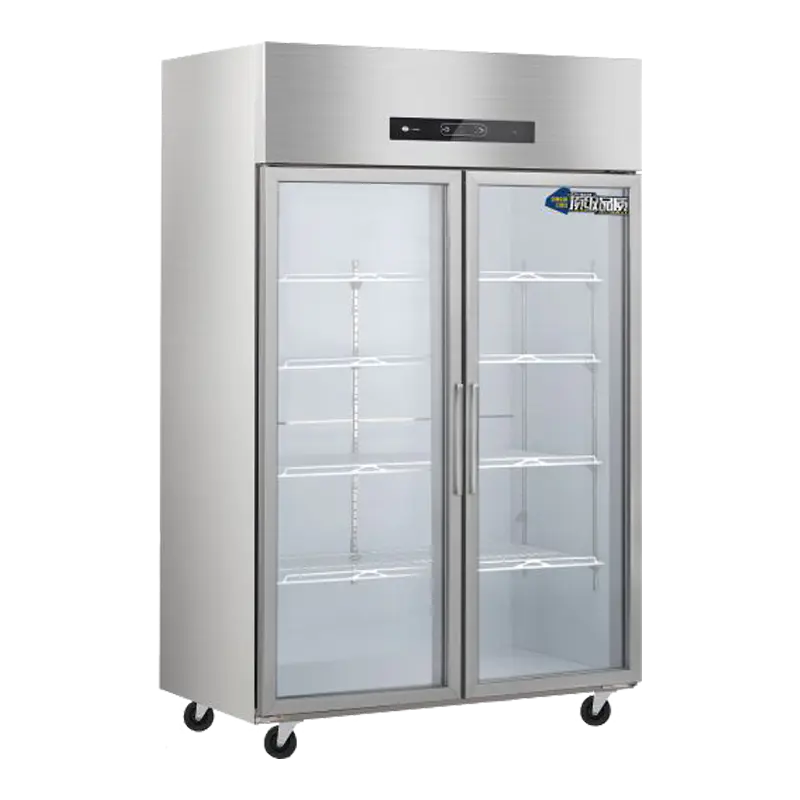
Upright display freezers are the workhorses of impulse-driven frozen sections. With vertical glass doors and multiple shelf levels, they maximize product visibility in a compact footprint — ideal for frozen meals, packaged snacks, and beverages that customers reach for on their way to the counter. Upright display freezers built for high-visibility merchandising are the most common choice for convenience stores that prioritize front-of-store sales.
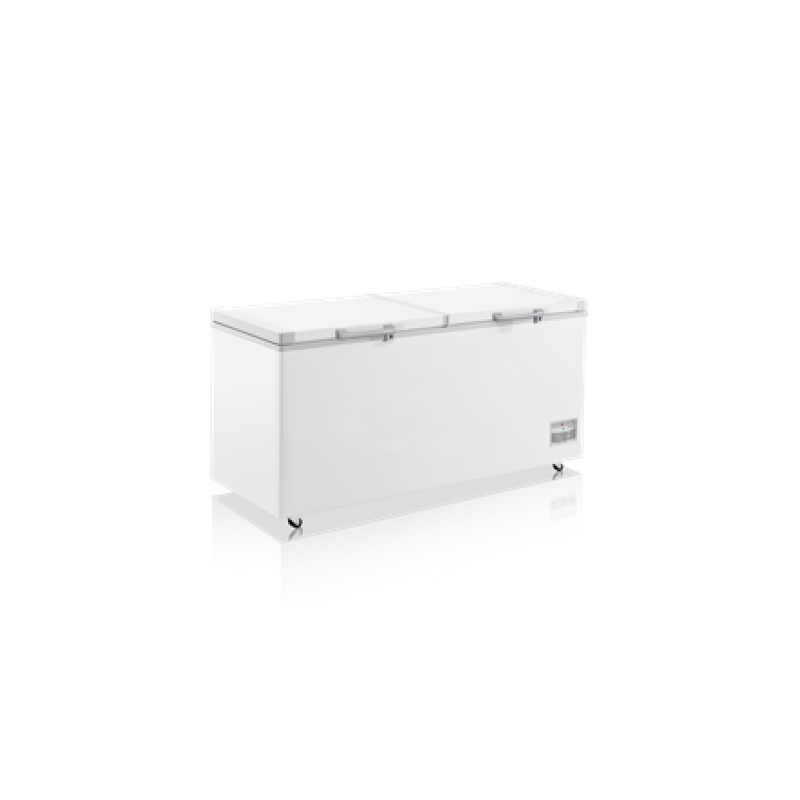
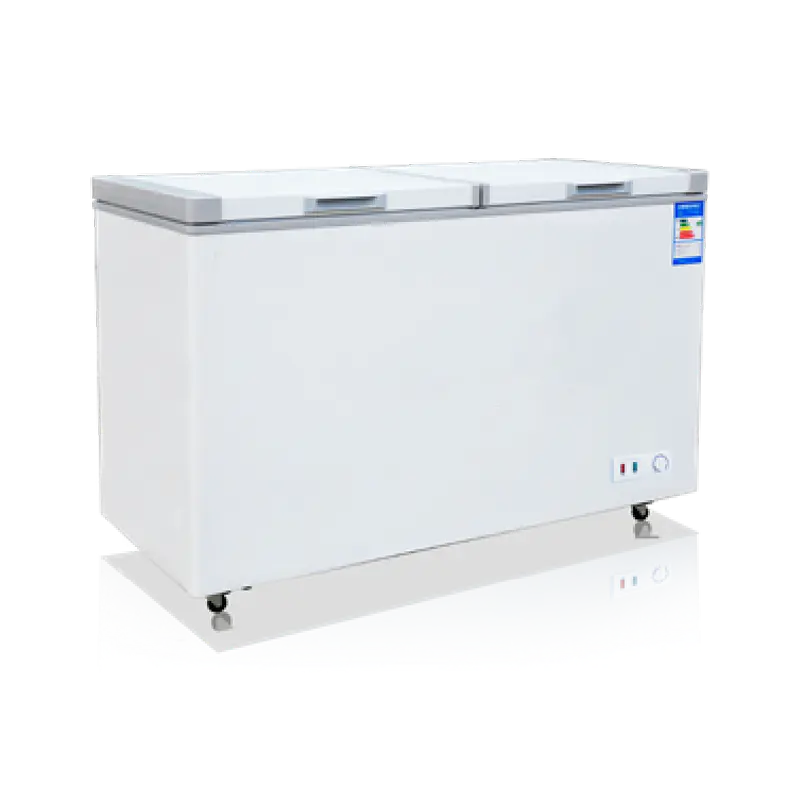
Chest freezers offer maximum storage volume per dollar and are well-suited for high-turnover bulk items like bagged ice, frozen burritos, and novelty ice cream bars. Their horizontal layout requires more floor space but keeps products insulated efficiently even during frequent access. Chest freezers designed for bulk frozen storage work best when you're stocking deep quantities of a few SKUs rather than a wide variety of items.
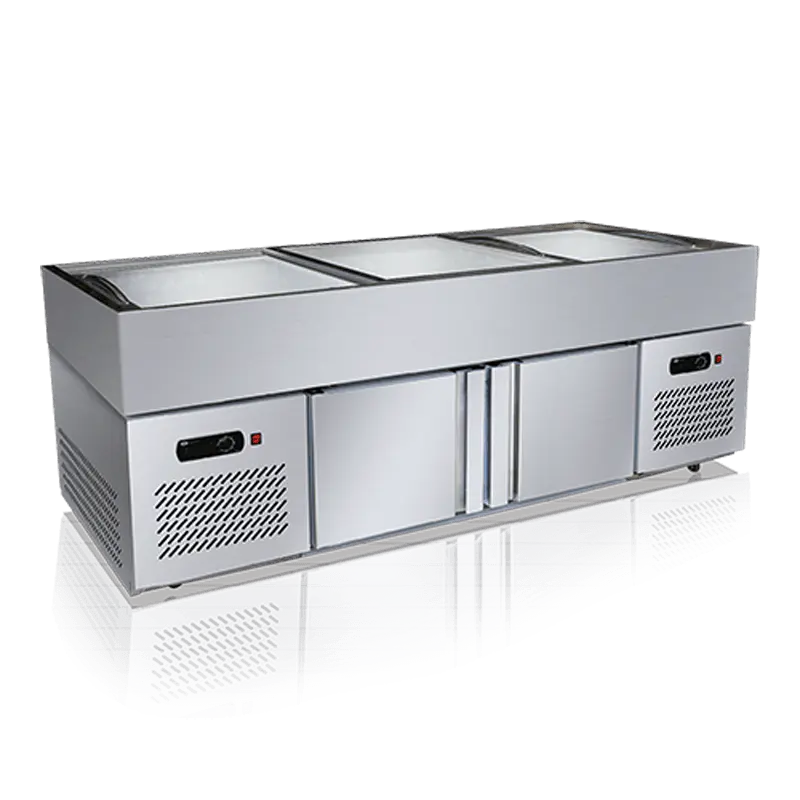
Ice cream display freezers are a specialized category worth considering separately. Their curved or flat glass lids, interior lighting, and low-profile designs are engineered specifically to showcase frozen novelties and drive impulse purchases near checkout or entrance areas. Ice cream display freezers for impulse-driven frozen treats consistently outperform standard chest freezers for novelty sales when placed correctly.
Finally, glass door multideck chillers bridge the gap between freezer and chiller, serving dairy, cold beverages, and semi-frozen products that need consistent temperature but also benefit from full product visibility across multiple shelf levels. Each type solves a different problem — and most stores above a certain volume need more than one.
Capacity Planning: How Much Frozen Storage Do You Actually Need
Oversizing a freezer is one of the most common mistakes convenience store operators make. A unit running at 30% capacity wastes electricity maintaining empty air space. Undersizing creates a different problem: stockouts during peak hours, over-ordering to compensate, and products stored in back-room conditions that aren't rated for them.
A practical way to estimate your required capacity:
- Count your frozen SKUs — how many distinct frozen products will you carry?
- Estimate daily unit sales per SKU — use your POS data or industry benchmarks for your store size.
- Multiply by your restocking interval — if you restock every 2 days, you need at least 2 days' worth of each product plus a 20–30% buffer for demand spikes.
As a rough reference point:
| Store Size | Frozen SKU Range | Recommended Capacity | Typical Unit Type |
|---|---|---|---|
| Small (under 800 sq ft) | 10–20 SKUs | 15–25 cu ft | Single upright display or chest freezer |
| Mid-size (800–1,500 sq ft) | 20–40 SKUs | 30–55 cu ft | Upright display + chest freezer combo |
| Large (1,500+ sq ft) | 40+ SKUs | 60+ cu ft | Multiple units with dedicated ice cream display |
For a deeper look at how unit dimensions translate to usable storage, see this guide on how to match chest freezer size to your actual capacity needs. And if you're still weighing whether a chest or upright format makes more sense for your layout, this chest freezer vs upright freezer: a practical buyer's guide walks through the trade-offs in detail.
Energy Use: What Your Freezer Costs You Every Year
Refrigeration isn't a background operating cost — it's often the dominant one. Convenience store refrigeration can account for up to 40% of total energy consumption, according to the ENERGY STAR program for small businesses. That figure becomes even more significant when you factor in that commercial freezers operate 24 hours a day, 365 days a year, with no downtime.
To put that in concrete numbers: according to the U.S. Department of Energy's commercial refrigeration efficiency data, a large commercial freezer can consume up to 38,000 kilowatt-hours per year. At an average commercial electricity rate of $0.12/kWh, that's over $4,500 annually — from a single unit.
The type of freezer you choose has a significant impact on that number. Open-display chest freezers with sliding glass lids are substantially more energy-efficient than open-air units with no door at all, because the glass barrier prevents continuous cold-air loss. Upright glass door freezers with self-closing doors and multi-pane insulated glass sit in the middle of the efficiency spectrum: more energy use than a sealed chest freezer, but far less than open-air designs.
ENERGY STAR-certified glass door freezers can save businesses up to 900 kWh and more than $110 annually compared to non-certified equivalents, with lifetime utility savings exceeding $980 per unit, according to ENERGY STAR's commercial refrigerators and freezers program. For a store running three or four freezers simultaneously, the annual savings compound quickly.
Key features to look for in an energy-efficient convenience store freezer:
- Double or triple-pane low-E glass doors with anti-fog heating
- Self-closing door mechanisms to prevent accidental cold-air loss
- LED interior lighting (consumes 50–75% less energy than fluorescent)
- High-efficiency brushless DC fan motors
- Lower-GWP refrigerants such as R-290 or R-600a
Display Design and Its Direct Impact on Sales
A freezer that keeps products cold but makes them hard to find is leaving money on the table. Research consistently shows that product visibility and accessibility are the two biggest drivers of unplanned frozen purchases — and your freezer's design either works for you or against you on both counts.
Upright freezers with clear glass doors create a natural product "billboard" that customers can scan without committing to opening anything. This passive visibility drives what retail researchers call the "decision before interaction" — the customer decides to buy before they even touch the door. Studies on how display chillers influence buying behavior in retail spaces show that well-lit, vertically arranged displays consistently outperform horizontal chest formats for impulse purchase categories.
Chest freezers, by contrast, require customers to actively look down and dig through product layers to find what they want — which works fine for category-destination purchases (someone specifically coming in for a bag of ice) but underperforms for novelty and impulse items.
Lighting plays an outsized role in freezer display effectiveness. LED interior lighting not only reduces energy use but also renders product packaging colors more accurately and brightly than fluorescent alternatives. An ice cream bar that looks vibrant and appealing under LED lighting in a glass-lid chest freezer will outperform the same product stored in a poorly lit solid-lid unit every single time.
Placement matters as much as the unit itself. High-impulse frozen items — ice cream, frozen novelties, single-serve frozen snacks — perform best when positioned near the checkout area or along the main customer path. Bulk frozen goods (multi-packs, family-size meals) can sit deeper in the store, where customers on deliberate shopping trips will seek them out regardless of placement.
How to Align Freezer Selection With Your Store Layout
Once you have a clear picture of capacity requirements, energy targets, and display priorities, the final step is mapping those needs to your physical space and traffic flow.
For most convenience stores, the optimal freezer strategy isn't a single unit — it's a combination. A glass door upright display freezer near the entrance or checkout captures impulse purchases on the way in or out. A chest freezer or deeper-capacity upright unit mid-store handles high-volume staples and bulk restocking. A dedicated ice cream display freezer positioned at a decision point — end-of-aisle, beside the beverage cooler, or adjacent to checkout — adds a focused impulse zone that consistently punches above its square-footage cost.
If you're still deciding between a chiller and a freezer for a specific product category, this chiller vs freezer: a practical buying and operating guide covers the temperature range trade-offs in detail.
Before finalizing any purchase, verify three things: the unit's actual internal dimensions versus its listed cubic footage (the two don't always align as expected), the clearance requirements for the condenser and compressor placement, and whether your electrical panel can support the load if you're adding multiple units simultaneously.
The freezer selection process isn't glamorous, but it's one of the few equipment decisions in a convenience store that directly affects energy costs, inventory management, and sales performance all at once. Getting the balance right between capacity, efficiency, and display design is what separates a frozen section that just functions from one that actively grows your revenue.