
 English
 русский
 Español
 عربى
عربى

Chest Freezer vs Upright Freezer: Manufacturer Buying Guide
Content
- 1 Chest freezer vs upright freezer: what matters in real use
- 2 Energy use and operating cost: the hidden long-term differentiator
- 3 Temperature stability and power-outage resilience
- 4 Usable storage, footprint, and loading: why “capacity” can be misleading
- 5 Access frequency and organization: how to avoid “lid-open loss”
- 6 Frost control, odor prevention, and product quality
- 7 Comparison table: chest freezer vs upright freezer for common buying criteria
- 8 Commercial application matching: choose the freezer by job, not by habit
- 9 Procurement checklist: what to specify to a manufacturer or supplier
- 10 When an upright freezer is the better choice
- 11 Recommendation: selecting the right freezer type with fewer surprises
Chest freezer vs upright freezer: what matters in real use
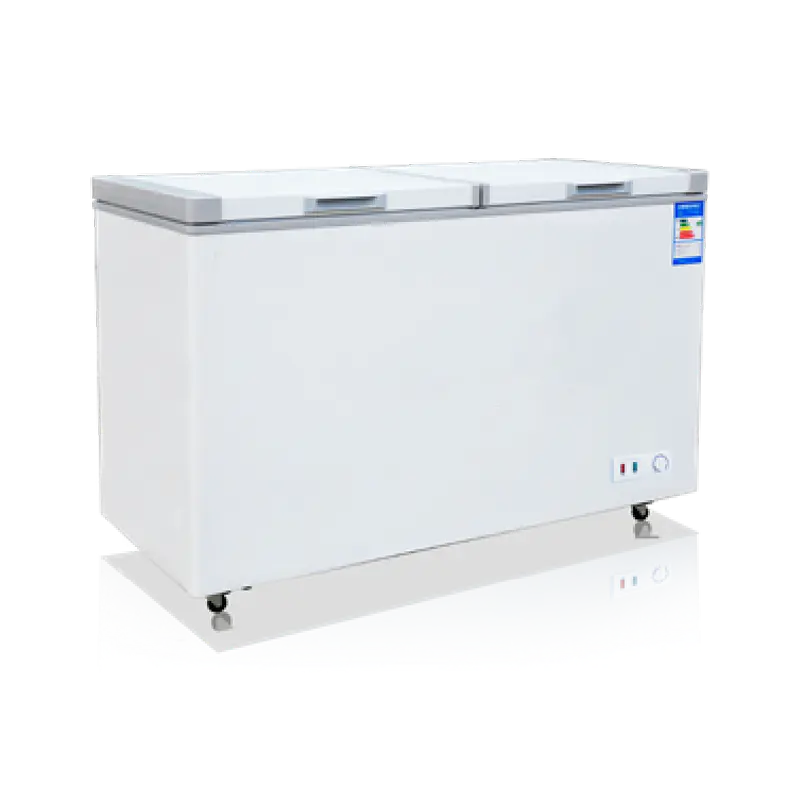
When you compare a chest freezer vs upright freezer, the “best” choice depends on three realities: operating cost, how often the door is opened, and how disciplined the storage workflow will be. In most bulk-storage scenarios (restaurants, supermarkets, catering prep, and family stock-up), a chest-style cabinet tends to win on efficiency and temperature stability because cold air stays inside when the lid opens.
From a manufacturer’s perspective, the most common purchasing mistake is selecting by volume alone. Two freezers with the same liters can behave very differently depending on insulation quality, door sealing structure, and temperature control stability. If you are evaluating commercial options, start by clarifying your access frequency (picks per hour), target holding temperature, and expected ambient conditions.
Practical takeaway: if you need the lowest cost per stored kilogram and the most stable cold chain during frequent opening, a chest freezer is often the safer technical choice. If your priority is rapid item visibility and “stand-and-grab” convenience, an upright freezer can still be the right tool.
Energy consumption is where the chest freezer vs upright freezer comparison becomes measurable. Because cold air is dense and “falls,” a top-opening cabinet loses less cold air at each access. In many real kitchens and retail backrooms, the cumulative savings come from thousands of brief openings, not from nameplate wattage.
A decision frame you can use
- If you open the freezer frequently (service line, high-traffic stockroom), prioritize sealing design and temperature recovery time over nominal capacity.
- If you store for long durations (bulk meats/seafood, seasonal inventory), prioritize insulation performance and stable thermostat control to reduce dehydration and quality loss.
- If electricity costs are high, the lifetime cost can exceed the purchase price. Even a modest annual kWh difference compounds over 5–10 years.
As a reference point used widely in the market, ENERGY STAR benchmarking often shows a meaningful spread between designs. For example, typical certified units are often cited around ~215 kWh/year for chest and ~395 kWh/year for upright models (with corresponding annual operating costs roughly doubling under common assumptions). Use these values as directional guidance, then confirm the exact kWh/year for the models you are quoting.
If you are sourcing in volume, request each supplier’s energy data and insulation specs, not only the brochure “energy-saving” statement. For our own chest freezer series, we place significant emphasis on reliable insulation structure and sealing details because that is where real operating cost is decided.
Temperature stability and power-outage resilience
Two problems drive food waste in frozen storage: temperature swings and extended warm exposure during outages. A chest design naturally reduces temperature swing during access because most of the cold mass remains below the opening line, and the lid opening does not “dump” cold air the way a vertical door can.
What to plan for during outages
In typical guidance used by food safety authorities, a full, unopened freezer can hold safe temperature for about 48 hours (and about 24 hours if half full). Your actual result will vary by room temperature, how tightly the unit seals, and how often it is opened. If outage risk is material in your region, prioritize insulation, sealing design, and a lid/door that closes firmly and consistently.
From a manufacturing standpoint, sealing geometry is not just “a gasket.” For example, stepped or multi-stage seal structures reduce leakage paths and help maintain steadier cabinet temperature after repeated openings. This is one reason top-opening commercial units are commonly selected for back-of-house bulk storage where inventory value is high.
Usable storage, footprint, and loading: why “capacity” can be misleading
Capacity labels (liters or cubic feet) do not tell you how easy it is to store and retrieve product. In practice, “usable capacity” depends on internal obstructions (shelves, evaporator housing), the shape of the cabinet bottom, and whether you can stack cartons without blocking airflow.
Chest freezers: high-density bulk storage
- Often better for large cartons, whole cuts, and seasonal stock because the interior is a single open volume.
- Better “thermal inertia” when filled—frozen mass stabilizes temperature and reduces compressor cycling.
- Requires a storage system (baskets/bins/zones) to avoid slow searching with the lid open.
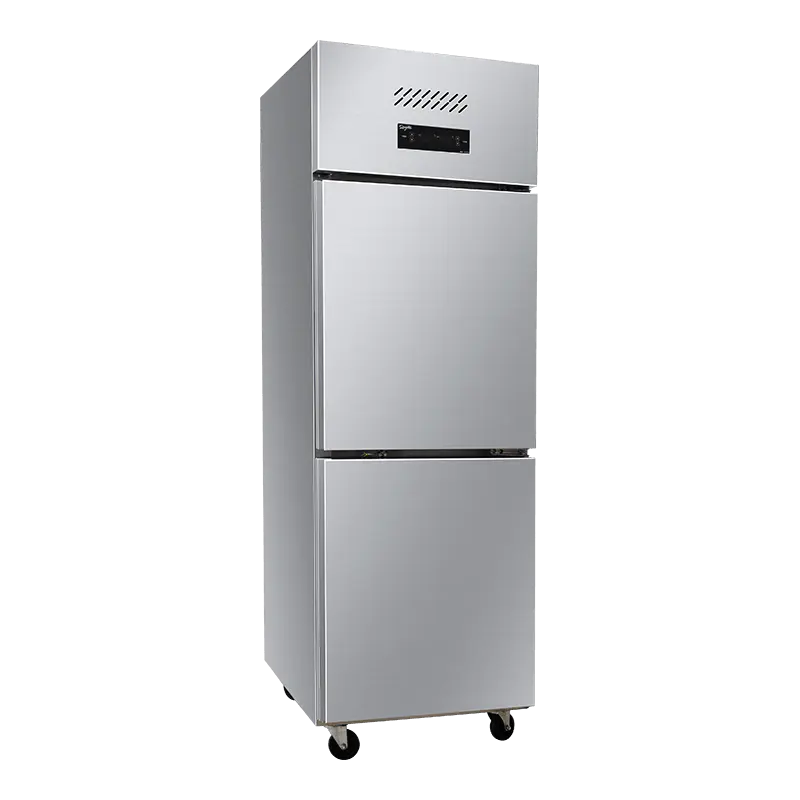
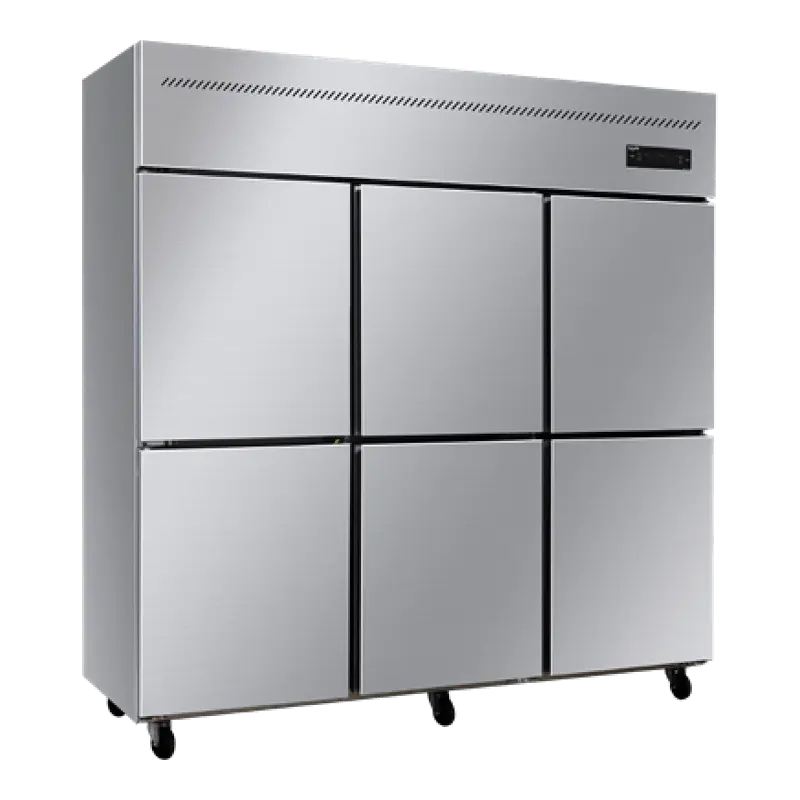
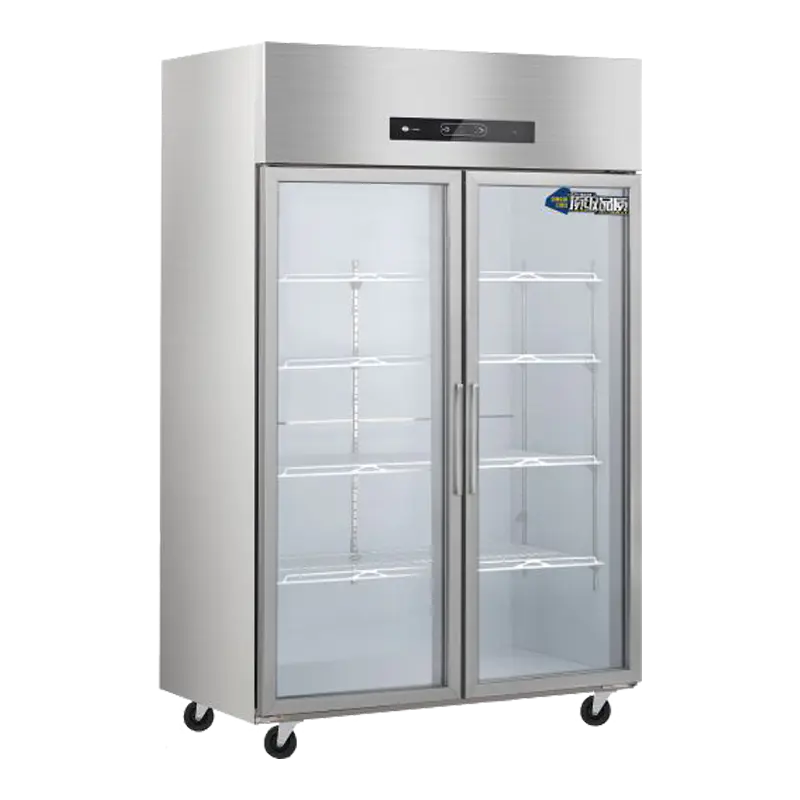
Upright freezers: high visibility, narrower footprint
- Shelves and drawers support fast item identification, useful for high-SKU environments.
- Typically easier for staff ergonomics (less bending), which can matter in daily operations.
- Door openings can spill cold air quickly, especially in warm rooms or during peak service.
If your operation has limited floor area but strong vertical clearance, an upright may fit better. If your operation prioritizes cost per stored carton and stable cold chain, a chest design is usually more forgiving.
Access frequency and organization: how to avoid “lid-open loss”
Many buyers choose upright units because they fear chest freezers become “a black hole.” That can happen, but it is a workflow issue, not a design limitation. A chest freezer can perform exceptionally well when you build a simple retrieval system that minimizes lid-open time.
A practical organization method for chest units
- Create zones: “Daily picks,” “Weekly picks,” and “Backstock.” Keep daily picks in top baskets.
- Use uniform bins so cartons stack flat and gaps are minimized (better temperature stability).
- Label by date and SKU; place newest stock at the bottom/back to support FIFO rotation.
- Set an internal “search limit”: if an item cannot be found in 10 seconds, close the lid, then search the inventory list.
For busy kitchens, the best practice is often a hybrid: keep an upright freezer or reach-in for high-frequency ingredients, and use a chest freezer for bulk backstock. This splits convenience from efficiency, reducing total energy loss and protecting inventory quality.
Frost control, odor prevention, and product quality
Frost management impacts both maintenance cost and product quality. Many upright freezers are “frost-free,” which uses periodic heating cycles to reduce ice buildup. That convenience can increase energy use and can contribute to dehydration (freezer burn) in long storage.
What to ask your supplier
- How does the cabinet sealing design reduce air exchange (a major driver of frost)?
- What is the insulation structure and foaming consistency (uniform foaming reduces thermal bridges)?
- How is odor transfer addressed (temperature stability and sealing reduce odor migration across foods)?
In our commercial chest freezer designs, we focus on stable internal conditions—insulation performance, sealing geometry, and consistent cooling—because these reduce frost formation and help limit odor transfer when storing seafood, meats, and other mixed products.
Comparison table: chest freezer vs upright freezer for common buying criteria
| Criteria | Chest Freezer | Upright Freezer |
|---|---|---|
| Energy efficiency (typical) | Usually higher due to reduced cold-air spill | Often lower; frequent door openings increase losses |
| Temperature stability during access | Strong (cold air stays below opening) | Moderate; warm air enters easily when opened |
| Bulk storage / carton stacking | Excellent open-volume loading | Good for smaller packs; shelves reduce stacking flexibility |
| Item visibility and “grab speed” | Requires bins/zones for speed | Very good shelves enable fast identification |
| Ergonomics | More bending; improved with baskets and zone planning | Better for frequent access and staff comfort |
| Best-fit scenarios | Backstock, bulk meats/seafood, wholesale, low-cost cold chain | High-SKU operations, frequent picks, limited horizontal space |
Commercial application matching: choose the freezer by job, not by habit
Restaurants, hotels, and catering
For back-of-house inventory, chest freezers are commonly selected because they hold temperature steadily and store high volumes efficiently. If you operate with predictable prep cycles, a chest unit supports bulk purchasing without raising risk of temperature swings during peak service.
Supermarkets and retail stores
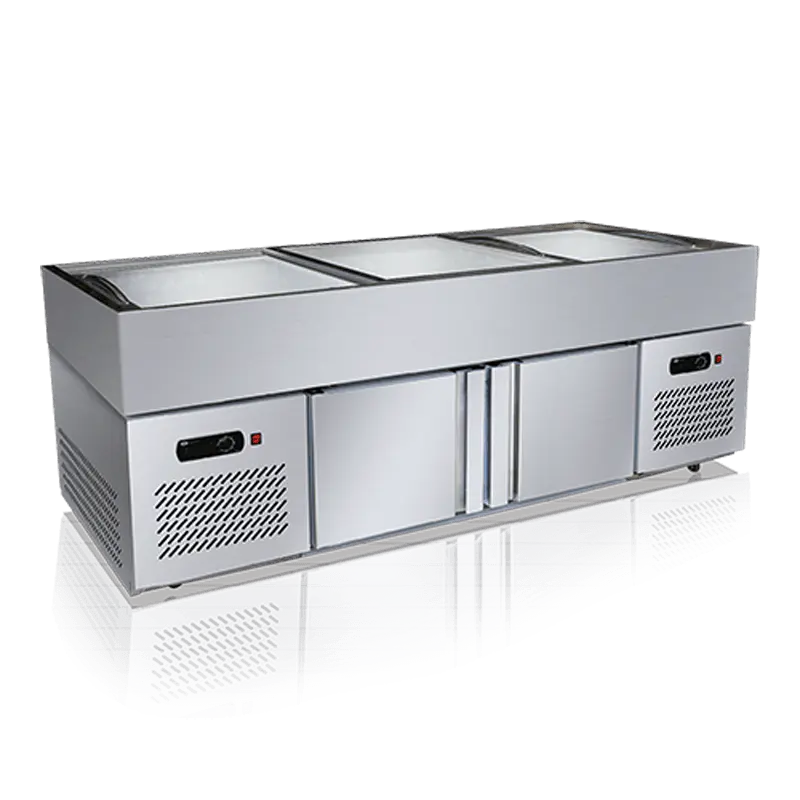
If the freezer is both storage and merchandising, a glass-top chest design can reduce unnecessary lid-open time while improving product visibility. This is why many retail environments use sliding-glass configurations such as a glass door chest freezer for frozen foods, dumplings, seafood, and ice cream categories.
Ultra-low temperature needs
If you require special holding temperatures (for example, laboratory or specialty food processing), confirm the target range and compressor design with the supplier. Some commercial chest models are engineered for deep-freezing applications down to -65℃, such as dedicated deep low temperature chest freezers. In these cases, stability and insulation quality are even more critical because any warm infiltration increases recovery time and energy consumption.
Procurement checklist: what to specify to a manufacturer or supplier
To compare quotations fairly, align suppliers on the same technical specification set. Below is a practical checklist we recommend buyers use when sourcing commercial freezers.
- Temperature range and control method (thermostat type, stability expectation, recovery time after opening).
- Insulation structure (foam thickness, uniform foaming process, thermal bridge prevention).
- Door/lid sealing design (gasket material, stepped sealing geometry, leakage prevention under repeated use).
- Compressor and tubing configuration (serviceability, heat rejection performance in your ambient conditions).
- Capacity and internal layout (basket system, bottom shape, usable loading height for cartons).
- Defrost and frost-mitigation approach (how maintenance is performed and how often).
- Electrical requirements and compliance (voltage/frequency options, certification needs for your market).
- Packaging, spare parts availability, and after-sales support expectations for your region.
If your use case is classic bulk preservation, a top-opening commercial configuration (for example, a top-opening flat bottom chest freezer) is often straightforward to specify and robust across different operating environments.
When an upright freezer is the better choice
A balanced chest freezer vs upright freezer assessment should recognize cases where upright wins on operations:
- You manage many SKUs and staff need fast identification without a binning system.
- You have limited horizontal floor space but sufficient vertical clearance.
- The freezer is opened continuously throughout the day and you want consistent “standing access” to reduce workflow friction.
In these cases, consider offsetting the energy and temperature swing disadvantages by choosing a well-sealed unit, placing it away from heat sources, and limiting door-open time with clear shelf labels and pick lists.
Recommendation: selecting the right freezer type with fewer surprises
If your priority is consistent preservation, lower operating cost, and strong resilience in real commercial workflows, a chest freezer is typically the better engineering answer in the chest freezer vs upright freezer comparison. The key is to match the unit to your access pattern and implement simple organization so the lid is not held open while searching.
For buyers who want a chest solution designed around stable low temperature and reduced leakage, focus on insulation quality and sealing details. In our commercial chest freezer lineup, we emphasize thickened insulation structure, sealing performance that minimizes cold-air leakage, and design choices that support cleaner storage with reduced frost and odor interaction—features that directly translate into steadier product quality and more predictable operating cost.
If you share your target temperature, loading style (cartons vs loose packs), and daily opening frequency, you can usually shortlist the correct configuration quickly and avoid paying for convenience features that do not improve your actual cold-chain outcomes.