
 English
 русский
 Español
 عربى
عربى

Refrigeration System 101: How It Works, Types, and Selection Guide
Content
- 1 What Is a Refrigeration System?
- 2 The 4 Main Components of a Vapor-Compression Refrigeration Cycle
- 3 How Does the Refrigeration Cycle Work Step-by-Step?
- 4 The 4 Main Types of Refrigeration Systems
- 5 Air-Cooled vs. Water-Cooled Refrigeration Systems: Which One to Choose?
- 6 Common Refrigeration System Problems and Troubleshooting Tips
- 7 How to Choose the Right Refrigeration System for Your Business
What Is a Refrigeration System?
A single hour of compressor downtime in a busy restaurant can easily cost over $500 in food spoilage and lost sales. That number alone explains why understanding how a refrigeration system works is critical for any business that handles perishable goods. At its simplest, a refrigeration system is a mechanical loop that transfers heat from a low-temperature space to a high-temperature environment. It does not “make cold” — it removes heat.
Every system relies on the second law of thermodynamics: heat naturally flows from warmer to cooler areas. A refrigeration system reverses that flow by applying external energy. A volatile fluid, the refrigerant, absorbs heat as it evaporates inside the cabinet and rejects that heat when it condenses outside. The same principle cools a walk-in freezer, a supermarket display case, and a commercial ice machine.
The 4 Main Components of a Vapor-Compression Refrigeration Cycle
Vapor-compression is the workhorse of modern refrigeration. Whether installed in a small undercounter unit or a large industrial chiller, the cycle always depends on four key components arranged in a closed loop. Each component mandates a specific pressure, temperature, and phase change in the refrigerant.
The table below summarises the role of each element and the state of the refrigerant before and after it. Knowing these transitions makes troubleshooting and system selection far more intuitive.
| Component | Primary Function | Input State | Output State | Practical Note |
|---|---|---|---|---|
| Compressor | Raises pressure and temperature of refrigerant vapour | Low-pressure, low-temperature vapour | High-pressure, high-temperature superheated vapour | Often called the heart of the system; heavy-duty compressors are used in commercial ice makers for continuous high-demand operation. |
| Condenser | Rejects heat; condenses vapour into liquid | High-pressure superheated vapour | High-pressure warm liquid | Condenser coils must stay clean; air-cooled models dominate small-to-medium commercial kitchens. |
| Expansion Device | Drops pressure and temperature of liquid refrigerant | High-pressure warm liquid | Low-pressure, low-temperature liquid-vapour mixture | Common types: capillary tubes, thermostatic expansion valves (TXV), electronic expansion valves. |
| Evaporator | Absorbs heat from the refrigerated space; refrigerant evaporates | Low-pressure cold liquid-vapour mixture | Low-pressure, slightly superheated vapour | Evaporator fans distribute cooled air; frost buildup reduces efficiency significantly. |
How Does the Refrigeration Cycle Work Step-by-Step?
A full cycle moves refrigerant continuously through the four components. Understanding the sequence helps in diagnosing performance issues and in spotting energy-wasting behaviour early.
- Evaporation (heat absorption) — Inside the evaporator coil, liquid refrigerant boils at a low temperature because the expansion device has reduced its pressure. As it turns into a vapour, it pulls heat from the cabinet air. The evaporator fan circulates this chilled air throughout the storage space.
- Compression (pressure and temperature rise) — The compressor draws in the low-pressure vapour from the evaporator and compresses it to a high-pressure, high-temperature gas. This step adds the energy needed to push the cycle forward.
- Condensation (heat rejection) — The superheated vapour travels to the condenser coil. A fan (or cooling water) removes heat, and the refrigerant condenses back into a high-pressure warm liquid. Proper condenser airflow is essential; blocked coils raise head pressure and cut efficiency.
- Expansion (pressure drop) — The warm liquid flows through the expansion device. A sudden drop in pressure causes flash evaporation, producing a cold liquid-vapour mixture ready to re-enter the evaporator. The cycle then repeats.
This loop runs continuously. A thermostat signals the compressor to start when the cabinet temperature drifts above the setpoint and to stop once the desired cold level is reached.
The 4 Main Types of Refrigeration Systems
Vapor-compression is the most common, but it is far from the only option. Four distinct system types address different budgets, environmental constraints, and cooling capacities.
| System Type | Principle | Typical COP (Efficiency) | Best Applications | Upfront Cost |
|---|---|---|---|---|
| Vapor-Compression | Mechanical compression of refrigerant vapour | 3.0 to 6.0 | Commercial kitchens, supermarkets, cold storage | Low to moderate |
| Absorption | Heat-driven cycle using ammonia-water or lithium bromide; uses thermal energy to drive refrigerant out of absorbent | 0.7 to 1.2 | Industrial plants with waste heat, remote off-grid cooling, large-scale chilling | High |
| Thermoelectric | Peltier effect: electric current creates a temperature difference across semiconductor junctions | 0.3 to 0.7 | Small wine coolers, portable beverage chillers, electronics cooling | Very low per unit |
| Magnetic | Magnetocaloric effect: certain materials heat up when magnetised and cool when demagnetised | 2.0 to 3.0 (lab scale) | Experimental and prototype household units; potential for low-vibration, high-efficiency cooling | Currently high |
For any foodservice or retail operation, vapor-compression remains the clear default choice. It delivers the best balance of purchase cost, energy efficiency, and serviceability. Absorption systems make sense only where large amounts of free waste heat are available. Thermoelectric and magnetic units are still too low in capacity for commercial use.
Air-Cooled vs. Water-Cooled Refrigeration Systems: Which One to Choose?
Condenser heat rejection method divides most commercial systems into air-cooled and water-cooled designs. Air-cooled units use ambient air blown across a finned coil. Water-cooled systems circulate water through a heat exchanger and often connect to a cooling tower. The right pick hinges on location, water availability, and operational cost tolerance.
- Air-cooled systems: Easier to install, no water consumption, lower initial cost. Best suited for small-to-medium kitchens and convenience stores. However, they release heat directly into the room, placing extra load on air conditioning. In high-ambient environments, capacity and efficiency drop.
- Water-cooled systems: Require a condenser water loop and cooling tower. Far more efficient in high-ambient zones; maintain stable performance. The trade-offs are higher installation cost, regular water treatment, and ongoing water expenses.
In most retail food scenarios, an air-cooled approach is the practical choice. Modern air-cooled kitchen refrigerators incorporate high-efficiency condenser coils and intelligent fan cycling that keep operating costs predictable without the complexity of a water circuit. For large central plants or supermarkets with heavy heat loads, water-cooled condensers paired with remote rack systems become viable.
Common Refrigeration System Problems and Troubleshooting Tips
Even well-designed systems develop faults. A quick diagnostic routine can prevent a minor issue from turning into a major repair bill or stock loss.
- Insufficient cooling — Likely causes: dirty condenser coils, low refrigerant charge from a slow leak, or an obstructed evaporator fan. Check coil cleanliness first; a commercial technician should verify superheat and subcooling if cleaning does not restore performance.
- Compressor short-cycling — Rapid on-off cycling often points to a defective thermostat, clogged capillary tube, or frequent door openings. Confirm the temperature controller and door gaskets. If the problem persists, a refrigeration mechanic should measure pressure differentials.
- Excessive noise — A loose mounting bolt or worn compressor internal parts can generate rattling or knocking. Inspect visible fasteners and ensure the unit sits level. Buzzing may indicate a failing start relay or capacitor.
- Ice buildup on evaporator — Frost thicker than a quarter-inch insulates the coil. Check defrost timer or heater operation. A blocked drain line can also cause ice accumulation.
- Compressor won't start — Verify power supply, fuses, and control board. A failed start component (capacitor or relay) is the usual culprit. If the compressor hums but never starts, cut power immediately and call a technician to avoid motor winding damage.
Preventive maintenance catches most of these issues early. A qualified technician should inspect refrigerant charge, clean coils, and test safety controls at least twice a year.
How to Choose the Right Refrigeration System for Your Business
No single system fits every floor plan or product type. The decision starts with three concrete questions: what you are storing, where the equipment will sit, and what ambient conditions it faces.
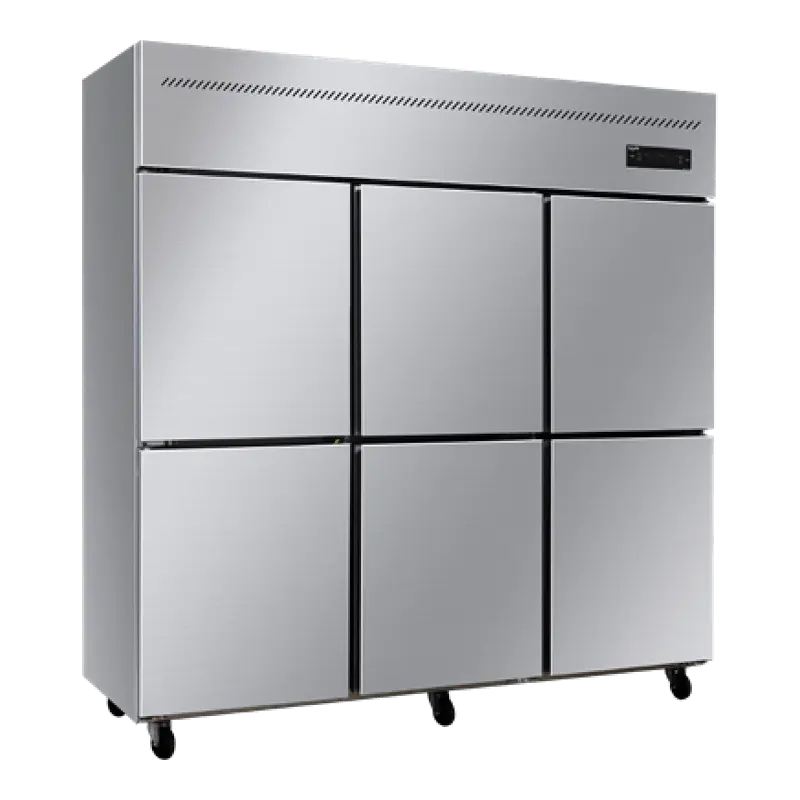
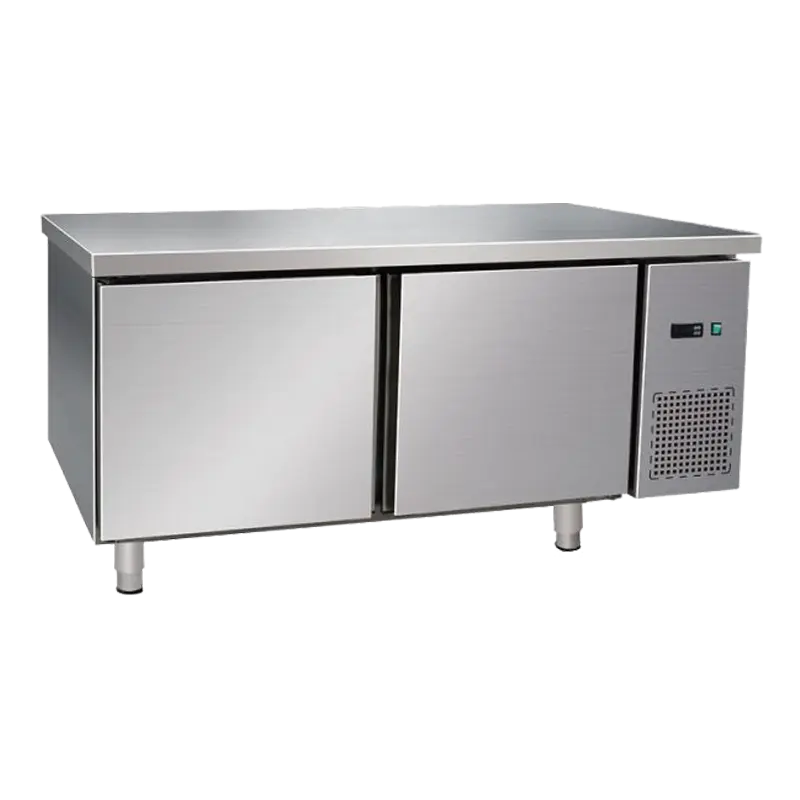
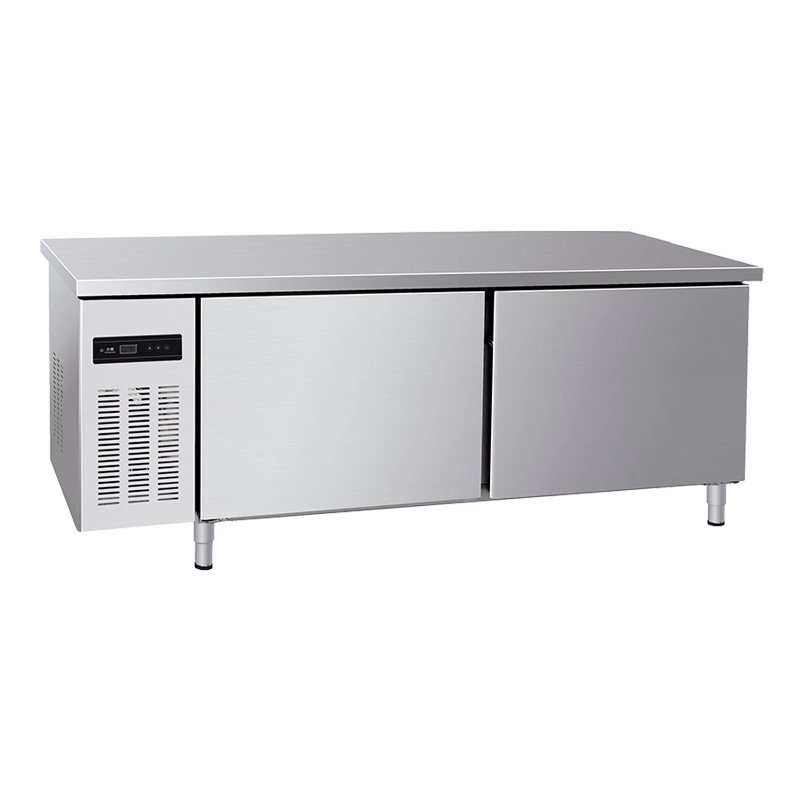
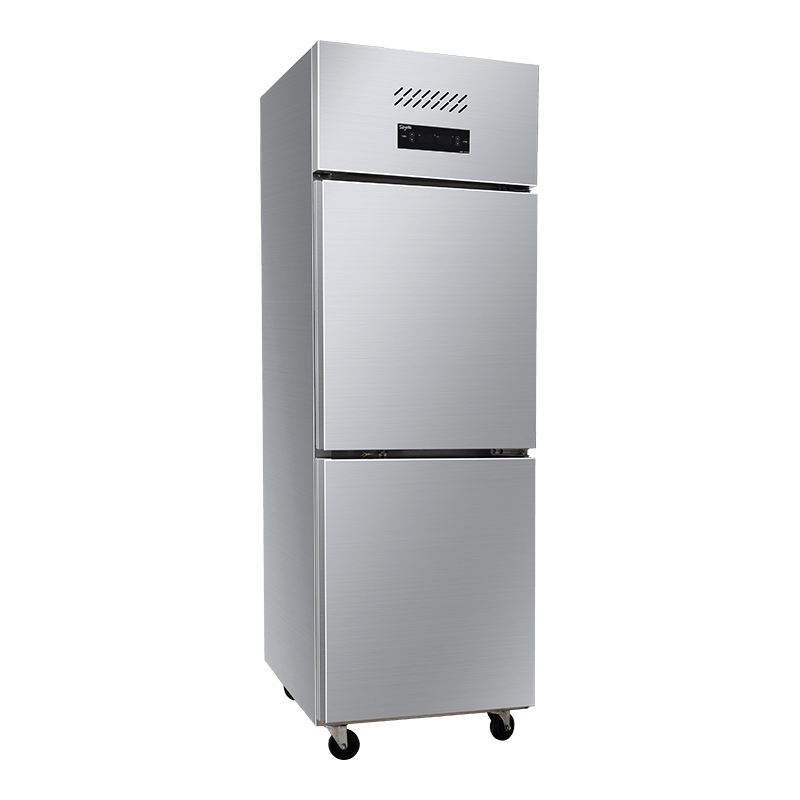
- Restaurant kitchen — Pans of prepared food, fresh produce, and dairy demand precise temperature control and frequent door openings. A robust reach-in refrigerator or undercounter unit that uses forced-air cooling keeps the interior temperature even. Look for stainless steel interiors and easy-to-clean gaskets. Many operators pair such units with dedicated commercial kitchen refrigerators that include digital thermostats and high-output evaporator fans.
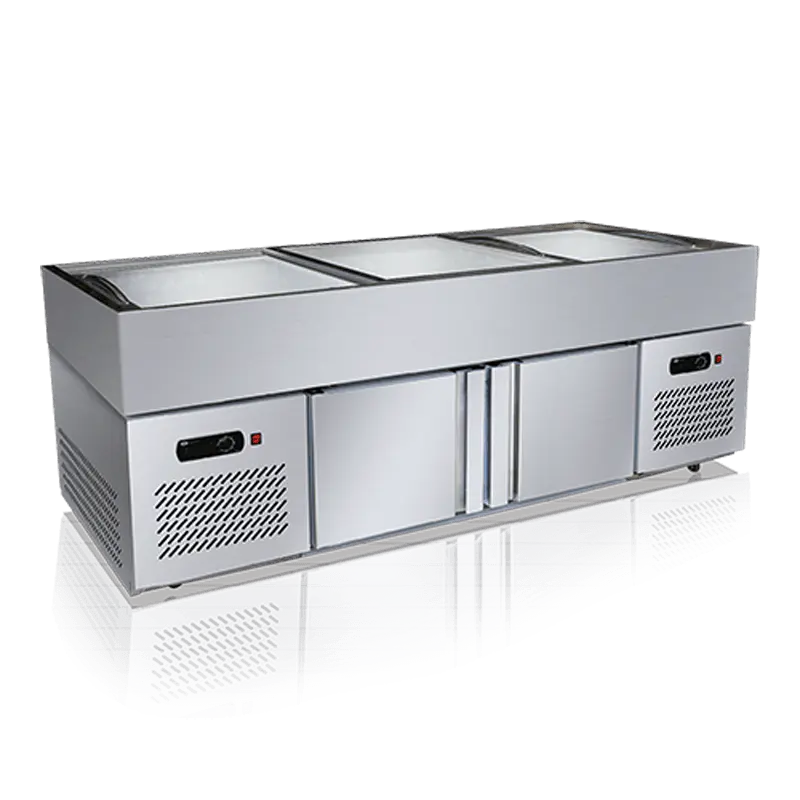
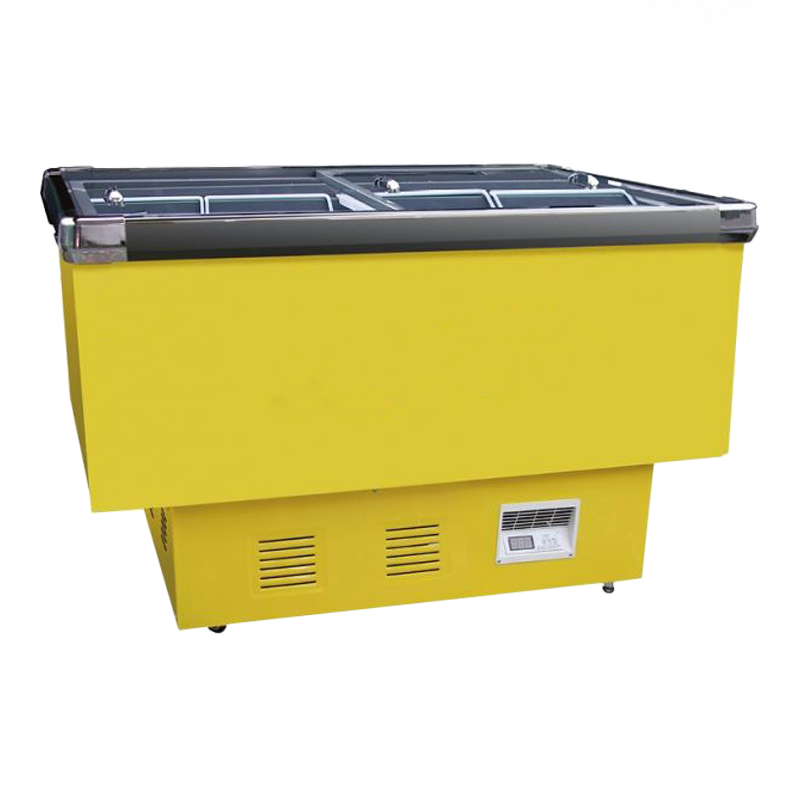
- Supermarket fresh section — Open display cases require steady cold air curtains and attractive product visibility. Air-curtain multideck chillers or island cases maintain temperature while allowing continuous customer access. For wrapped meat and dairy, island refrigerated display cases offer 360-degree visual merchandising. The system’s capacity must compensate for air infiltration from the selling floor.
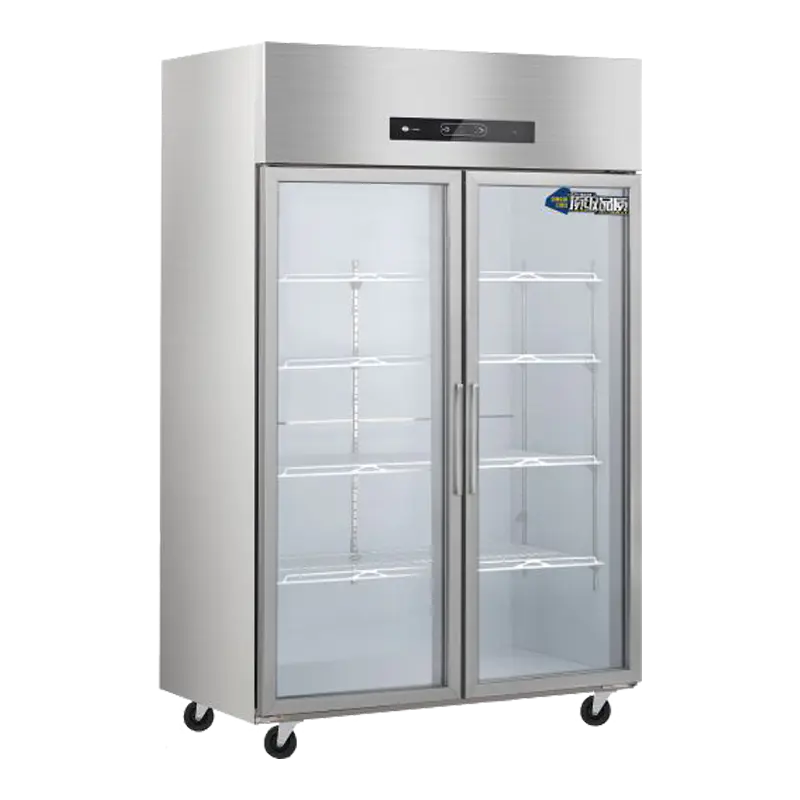
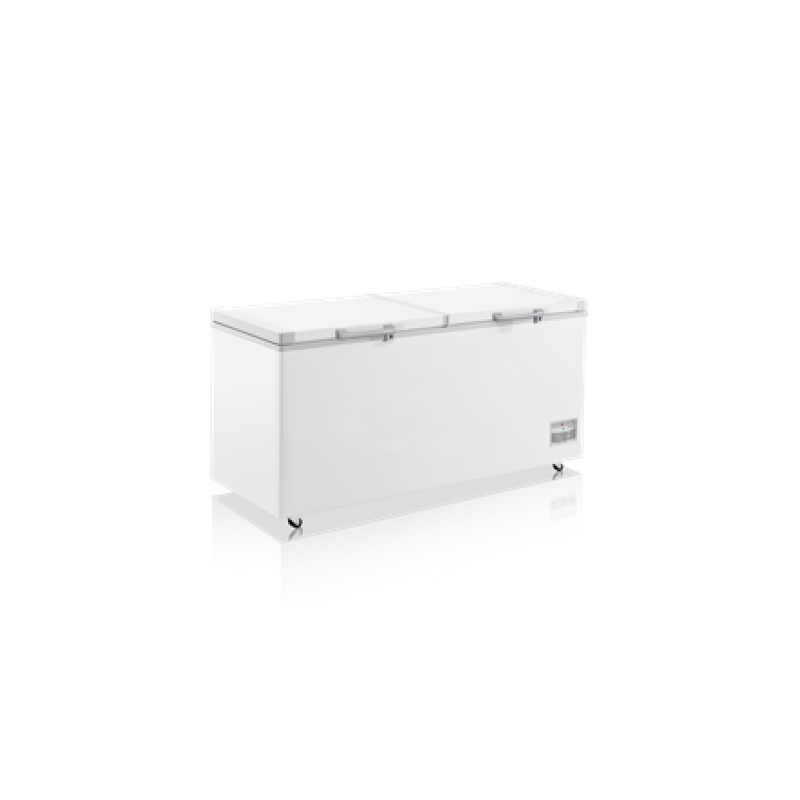
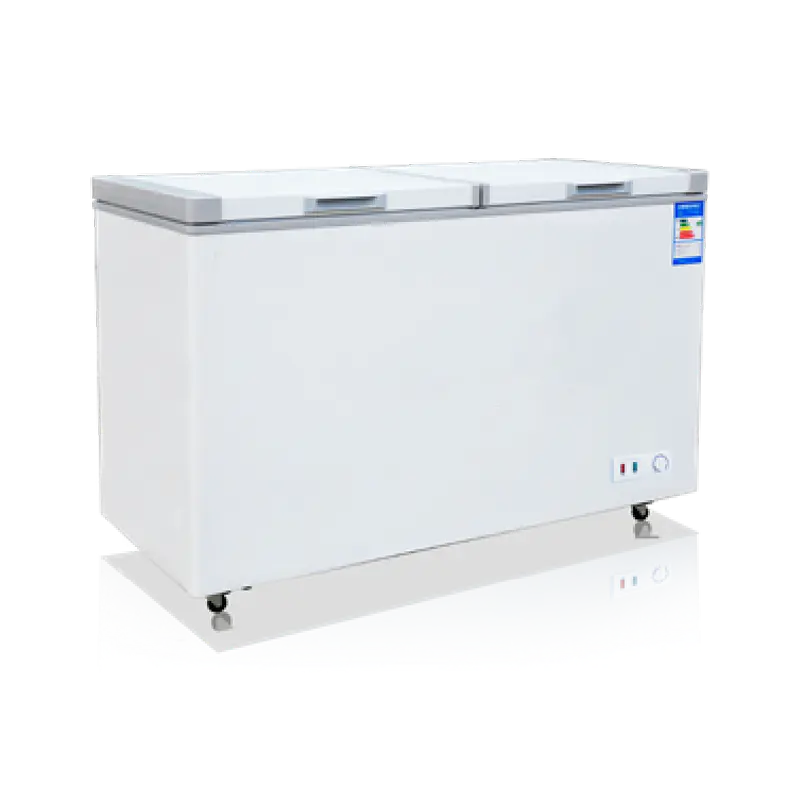
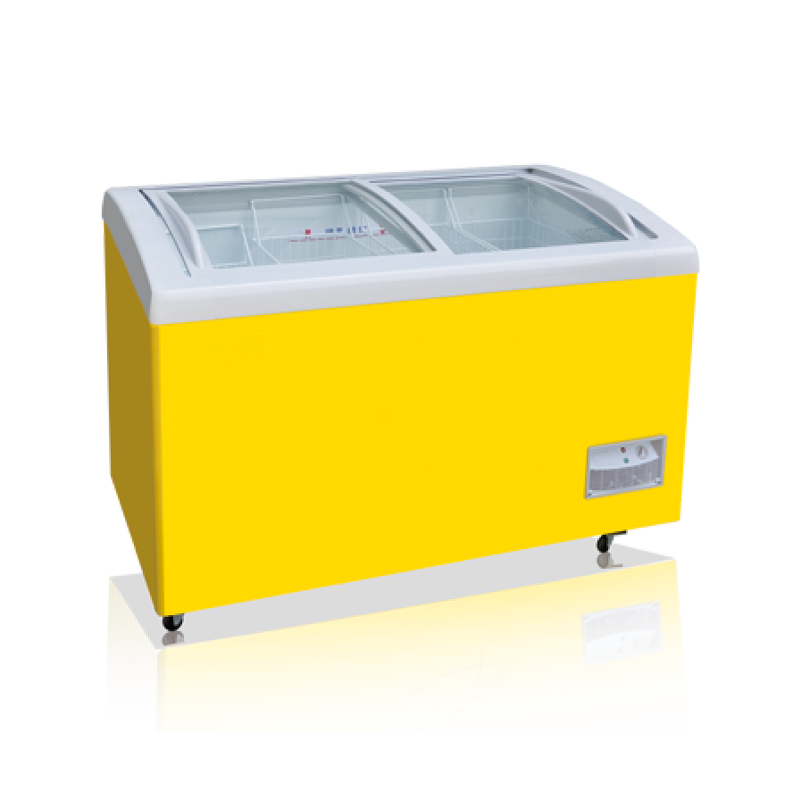
- Convenience store cold beverages — Glass door merchandisers and chest freezers handle high turnover and frequent restocking. Sliding or hinged glass doors reduce energy loss, while a built-in defrost system prevents fogging. Glass door chest freezers with LED lighting boost impulse sales and keep products at a consistent temperature even near the glass.
Beyond the load profile, factor in the available electricity supply and ambient conditions. A hot kitchen in the Southwest will stress an air-cooled condenser far more than a climate-controlled supermarket backroom. Slightly oversizing the system by 10 to 15 percent builds in a buffer for pull-down after restocking and for gradual coil fouling between cleanings.
Finally, consider the refrigerant. R290 (propane) is rapidly replacing R404A in self-contained commercial cabinets because of its ultra-low global warming potential (GWP of 3 vs. 3922 for R404A) and slightly higher energy efficiency. R290 units now dominate the new-equipment market and align with tightening EPA regulations.