
 English
 русский
 Español
 عربى
عربى

Condensing Unit Refrigeration: Selection, Types, and Maintenance Guide
Content
- 1 What Is a Refrigeration Condensing Unit and How Does It Work?
- 2 Key Components Inside a Condensing Unit
- 3 Types of Condensing Units: Temperature, Cooling, and Application
- 4 How to Choose the Right Condensing Unit: A 5-Step Selection Framework
- 5 Matching Your Condensing Unit to Evaporators and Display Equipment
- 6 Installation Best Practices for Commercial Condensing Units
- 7 Maintenance Schedule and Troubleshooting Common Issues
- 8 Refrigerant Regulations: Compliance and What's Changing
What Is a Refrigeration Condensing Unit and How Does It Work?
A walk-in freezer in a busy restaurant stops cooling on a Friday night. The culprit, more often than not, traces back to a single component: the condensing unit. This assembly is the heat rejection engine of any vapor-compression refrigeration system. Without it, refrigeration simply does not happen.
In a refrigeration cycle, the condensing unit receives low-pressure, superheated refrigerant vapor from the evaporator. The compressor inside the unit pressurizes this vapor, raising its temperature dramatically — often above 65°C (150°F). This hot, high-pressure gas then flows through the condenser coil, where a fan (in air-cooled models) or water circulation (in water-cooled models) strips away heat. The refrigerant condenses into a high-pressure liquid and exits toward the expansion valve, ready to absorb heat all over again.
Think of the condensing unit as the system's radiator. It expels every BTU that the evaporator absorbed from the refrigerated space, plus the heat added by the compression process itself. A well-matched condensing unit maintains this balance efficiently. An undersized unit struggles to reject heat, raising head pressures and energy consumption. An oversized unit cycles too frequently, shortening compressor life.
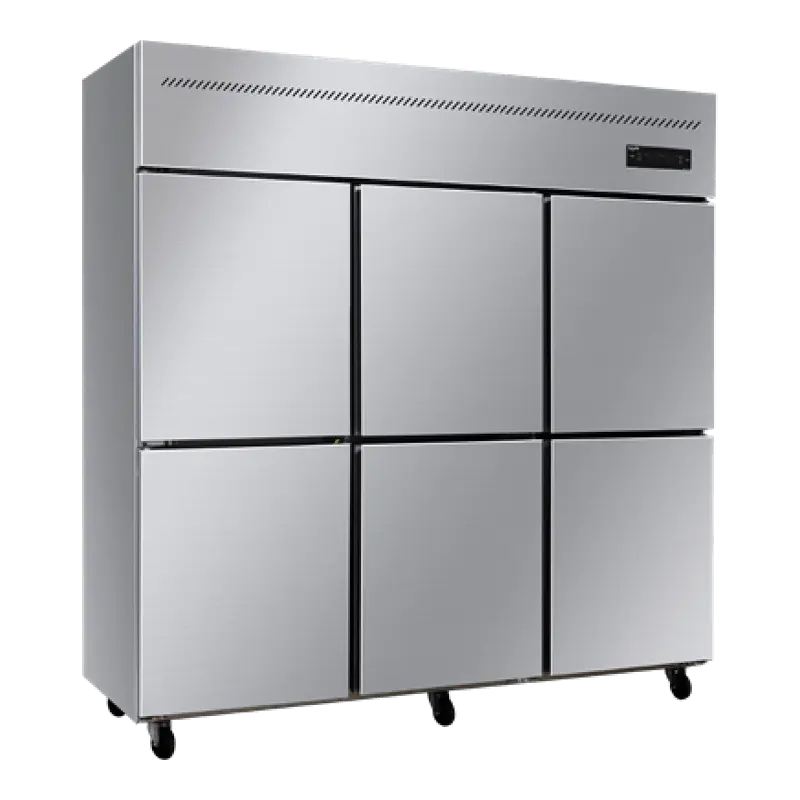
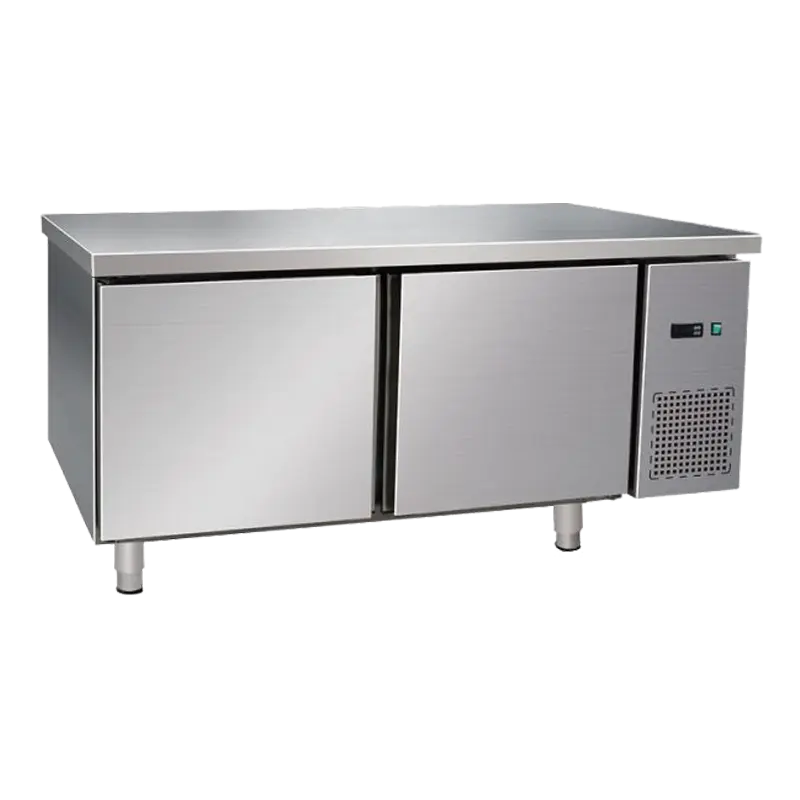
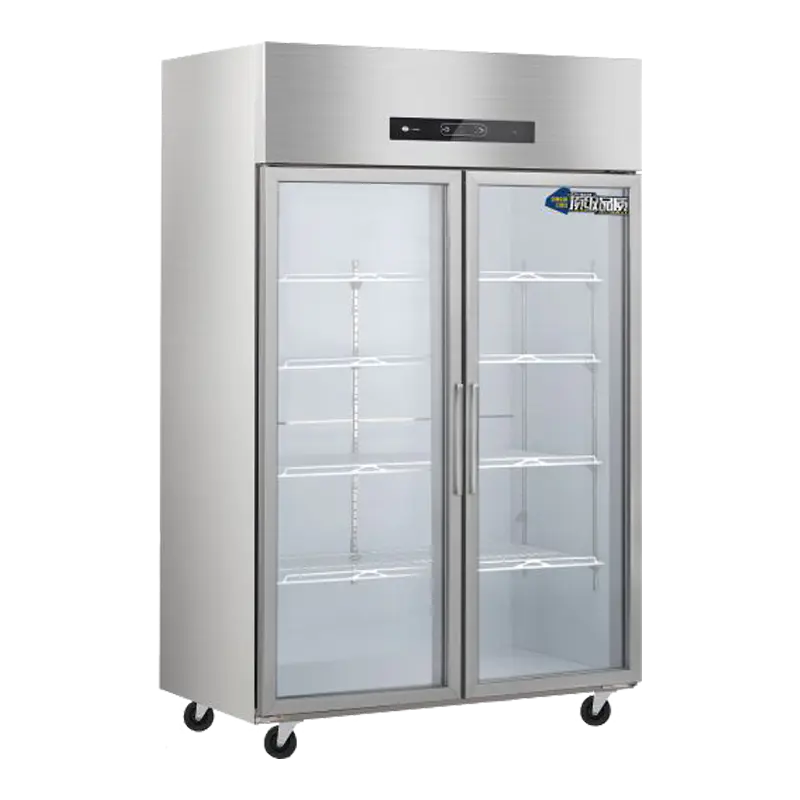
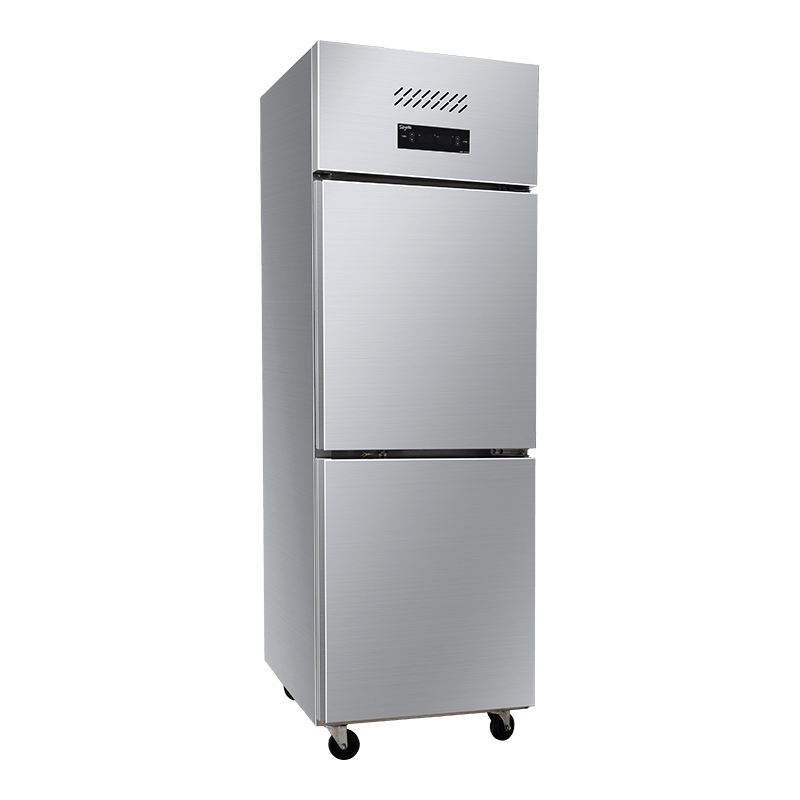
The entire assembly typically mounts outdoors or in a dedicated equipment room. In commercial kitchens and cold storage facilities, you will find condensing units paired with kitchen refrigerators, walk-in coolers, and display cases. The same fundamental principle applies whether the unit serves a small undercounter cabinet or a 10,000-square-foot cold storage warehouse.
Key Components Inside a Condensing Unit
Every condensing unit relies on four core components working in sequence. Understanding each one clarifies where failures occur and what maintenance actually prevents.
The compressor is the single most expensive and critical component. Scroll, reciprocating, and rotary compressors dominate commercial refrigeration. Scroll types deliver higher efficiency at partial load. Reciprocating models handle wider pressure ratios and remain common in low-temperature applications. The compressor's horsepower rating directly correlates with the system's cooling capacity — but matching it to the load requires calculating BTU per hour, not just swapping in a larger motor.
The condenser coil converts hot refrigerant gas to liquid. Copper tubes with aluminum fins remain the industry standard for air-cooled units. Microchannel condensers, made entirely of aluminum, have gained traction because they use less refrigerant and resist corrosion better in coastal environments. The coil's surface area and the airflow across it determine how much heat the unit can reject at a given ambient temperature.
The condenser fan motor pushes ambient air across the coil. Standard PSC (permanent split capacitor) motors are common, but ECM (electronically commutated motor) technology offers 30–50% energy savings on fan operation. This matters because condenser fans run whenever the compressor runs — which, in a busy commercial kitchen, can exceed 4,000 hours annually.
A liquid receiver stores excess refrigerant after condensation, compensating for varying load conditions. Downstream, the filter-drier traps moisture, acids, and particulates before they reach the expansion valve. A sight glass lets technicians verify proper refrigerant charge and detect moisture. These smaller components rarely fail on their own, but neglecting them during routine service invites compressor damage that costs thousands to repair.
Types of Condensing Units: Temperature, Cooling, and Application
Condensing units are classified by three parameters: operating temperature range, cooling method, and installation location. Each classification determines which applications the unit can serve and what trade-offs the operator accepts.
Temperature Classification
| Class | Evaporator Temp. Range | Typical Applications |
|---|---|---|
| High Temp (HBP) | -10°C to +10°C (14°F to 50°F) | Air conditioning, floral coolers, wine storage |
| Medium Temp (MBP) | -20°C to -5°C (-4°F to +23°F) | Commercial refrigerators, display cases, prep tables |
| Low Temp (LBP) | -40°C to -20°C (-40°F to -4°F) | Walk-in freezers, ice cream storage, blast chillers |
Selecting the wrong temperature class produces immediate problems. A medium-temperature unit pressed into low-temperature service runs excessive compression ratios, overheats, and fails prematurely. The compressor's rated BTU output also drops as the evaporator temperature decreases — a 1 HP medium-temp compressor might deliver 4,000 BTU/H at -5°C evaporator but only 2,200 BTU/H at -25°C.
Air-Cooled vs. Water-Cooled
| Factor | Air-Cooled | Water-Cooled |
|---|---|---|
| Initial Equipment Cost | Lower | Higher (requires cooling tower or water loop) |
| Operating Efficiency (COP) | Moderate; drops sharply above 35°C ambient | Higher and stable regardless of outdoor temperature |
| Maintenance Complexity | Low; clean condenser fins quarterly | Higher; requires water treatment and pump maintenance |
| Installation Space | Needs ample ventilation clearance | Compact; suitable for indoor mechanical rooms |
| Suitable Climate | All climates with proper sizing | Best for consistently hot regions or confined spaces |
Most commercial kitchens, supermarkets, and cold storage facilities choose air-cooled units. The lower upfront cost and simpler maintenance outweigh the efficiency gap in all but the hottest climates. Water-cooled units make sense in large centralized plants where a cooling tower already exists — but for a standalone walk-in cooler behind a restaurant, air-cooled remains the practical choice.
Indoor vs. Outdoor Installation
Outdoor condensing units include weather-resistant housings and head pressure controls for cold-weather operation. Indoor units, often called "remote" condensing units, lack these features and must reside in a ventilated equipment room. Never install an outdoor-rated unit indoors without verifying ventilation — recirculating hot discharge air raises condensing temperature and slashes efficiency by 10–15%.
How to Choose the Right Condensing Unit: A 5-Step Selection Framework
Selecting a condensing unit requires more than matching horsepower to a cooler's catalog number. The following five-step framework prevents the three most common errors: undersizing, mismatched temperature ratings, and ignoring environmental constraints.
- Calculate the Total Cooling Load (BTU/H). Start with the heat load from product pull-down, transmission through walls, air infiltration, lighting, and occupancy. For a 10 ft x 10 ft x 8 ft walk-in freezer maintained at -18°C (0°F) in a 32°C (90°F) ambient, the total load typically lands between 8,000 and 12,000 BTU/H depending on insulation thickness and daily door openings. Use load calculation software or ASHRAE tables — do not guess based on cooler square footage alone.
- Select the Correct Temperature Range. Match the unit's temperature class (HBP, MBP, LBP) to the desired box temperature. For freezers, specify low-temperature condensing units. For reach-in refrigerators and display freezers, medium-temperature units usually suffice. Always check the manufacturer's performance data at your target evaporator temperature — a unit rated at 4,500 BTU/H at -7°C might produce only 3,200 BTU/H at -12°C.
- Choose Air-Cooled or Water-Cooled. Calculate total cost of ownership over five years, not just equipment price. Factor in water costs, treatment chemicals, and pump electricity for water-cooled; factor in condenser cleaning labor for air-cooled. For most single-unit commercial applications, air-cooled wins on TCO.
- Verify Refrigerant Compatibility. The condensing unit must match the system's refrigerant type and charge. R-290 (propane) units require spark-proof electrical components and strict charge limits per UL and ASHRAE 15. R-448A and R-449A are common R-404A replacements with lower GWP values. Do not mix refrigerants — even residual amounts from a previous charge reduce efficiency and risk chemical instability.
- Confirm Electrical Supply and Ambient Conditions. Check voltage (208/230V, 460V, 575V), phase (single or three-phase), and frequency (60 Hz in the US). Verify the unit's maximum rated ambient temperature — a standard air-cooled unit rated to 43°C (110°F) will trip its high-pressure switch in an unshaded rooftop installation in Phoenix if not derated. For outdoor installations in cold climates, specify a head pressure control kit to maintain proper condensing pressure when ambient temperatures drop below 10°C (50°F).
Skipping any one of these steps introduces a failure point. The most expensive mistake is ordering a condensing unit based on horsepower alone, only to discover the compressor is oversized for a medium-temperature load, short-cycles, and washes out its bearings within 18 months. Follow all five steps sequentially, and document each decision with the performance data that supports it.
Matching Your Condensing Unit to Evaporators and Display Equipment
A condensing unit never operates in isolation. The evaporator — often called the unit cooler inside a walk-in box or the cold-wall evaporator inside a reach-in cabinet — must be matched for both capacity and refrigerant flow characteristics. Mismatched pairs lead to poor humidity control, coil icing, and compressor floodback.
The condensing unit's capacity at the design evaporator temperature must equal or slightly exceed the evaporator's rated capacity at the same condition. A 10% oversizing margin accounts for field conditions that degrade performance: slightly longer refrigerant lines, dirt accumulation on fins, and voltage drops at the compressor terminals. Exceeding 20% oversizing, however, risks liquid refrigerant returning to the compressor suction — a condition called floodback that dilutes crankcase oil and scores bearing surfaces.
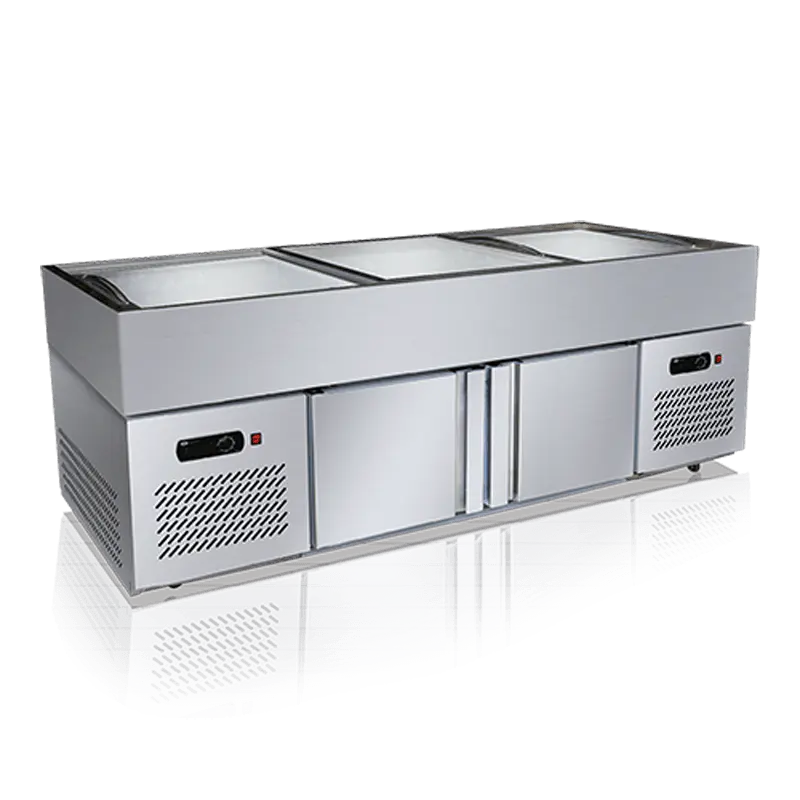
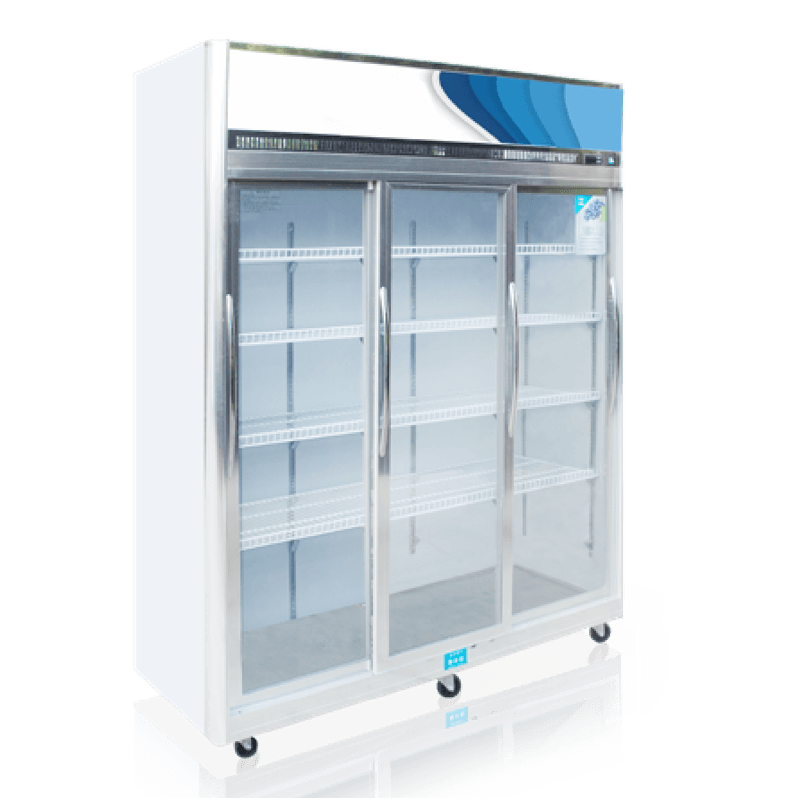
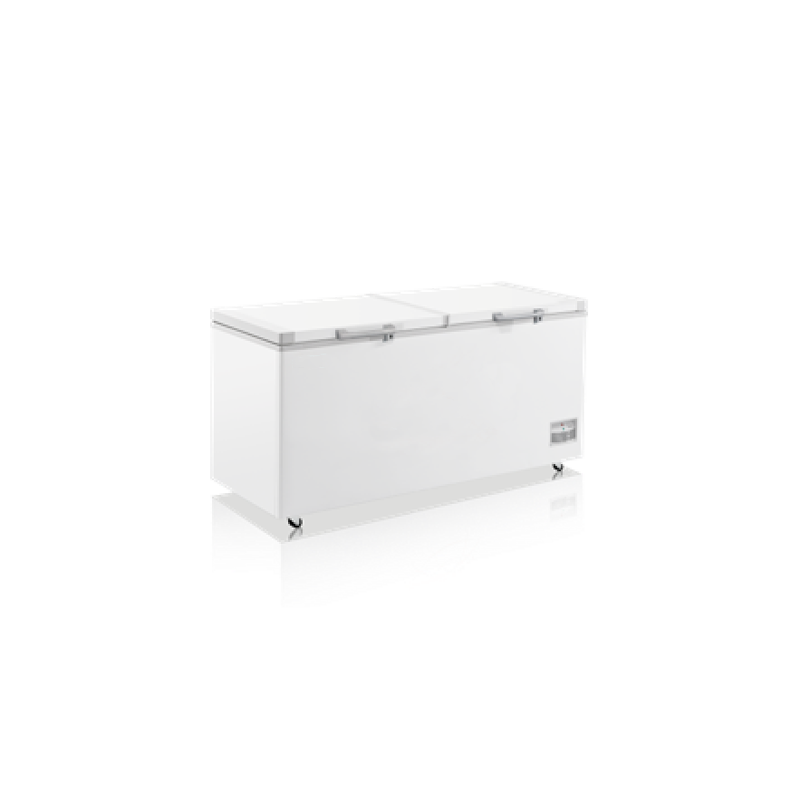
Commercial display cases present unique matching challenges. Open-front refrigerated merchandisers, common in supermarkets and convenience stores, carry higher infiltration loads than closed-door chest freezers or reach-in cabinets. The condensing unit serving an open display case must handle 30–50% more heat load than an equivalent closed-door unit of the same cubic volume. When retrofitting older display cases with new condensing units, always measure the actual pull-down time and compressor run time under peak summer conditions before finalizing the specification.
Expansion valve selection forms the third leg of this triad. Thermostatic expansion valves (TXVs) meter refrigerant flow into the evaporator based on superheat at the coil outlet. An incorrectly sized TXV starves or floods the evaporator regardless of how perfectly the condensing unit is matched on paper. The valve's capacity rating must align with the condensing unit's net refrigeration effect at the design temperature — not just its nominal tonnage.
Installation Best Practices for Commercial Condensing Units
Installation errors account for more premature compressor failures than manufacturing defects. The following practices prevent the three most damaging installation mistakes.
Clearance and ventilation come first. Air-cooled condensing units require minimum clearance on all sides — typically 30 inches on the condenser coil face and 18 inches on electrical access panels. Installing a unit under an overhang, inside an enclosed courtyard, or against a wall without the manufacturer's minimum clearance recirculates hot discharge air. The condensing temperature climbs, head pressure rises, and energy consumption increases by 8–12% for every 5°C increase in condensing temperature above design conditions.
Refrigerant piping requires careful planning. Keep suction lines as short as possible — ideally under 15 meters (50 feet) equivalent length. Long suction lines increase pressure drop, which reduces compressor capacity and raises discharge temperature. Slope horizontal suction lines downward toward the compressor at 1 cm per meter to promote oil return. Insulate the entire suction line with closed-cell foam to prevent condensation and reduce heat gain. Never undersize the liquid line — a diameter that is too small creates flash gas before the expansion valve, causing erratic metering and reduced evaporator capacity.
Electrical connections demand precision. Three-phase scroll compressors are phase-sensitive. Reversing any two phases causes the scroll to run backward — it will not pump, will make excessive noise, and can sustain permanent damage in under a minute. Always verify phase rotation with a phase sequence indicator before the first start-up. Install a phase monitor that locks out the compressor if a phase drops or reverses. For single-phase units, verify the start capacitor and potential relay match the compressor manufacturer's specifications — substituting generic components leads to hard starts and tripped breakers.
Maintenance Schedule and Troubleshooting Common Issues
Preventive maintenance extends condensing unit life well beyond 10 years. Reactive maintenance — waiting for a failure — cuts that expectancy in half and multiplies repair costs by three when emergency labor rates apply.
| Interval | Task | Tools / Notes |
|---|---|---|
| Monthly | Inspect condenser fins for debris; listen for unusual noise | Flashlight, visual inspection only |
| Quarterly | Clean condenser coil with fin comb and coil cleaner; check fan blade balance | Coil cleaner spray, fin straightener, compressed air |
| Every 6 Months | Check refrigerant pressures and superheat; inspect electrical connections for tightness | Manifold gauge set, torque screwdriver, multimeter |
| Annually | Replace filter-drier; test defrost controls; verify compressor contactor contacts | Replacement drier, contactor pull test, insulation tester |
| Every 3 Years | Send oil sample for analysis (large systems); test crankcase heater function | Oil test kit, amp clamp |
Common Problems and Corrective Actions
| Symptom | Likely Cause | Solution |
|---|---|---|
| High head pressure (HP switch tripping) | Dirty condenser coil; condenser fan not running; non-condensables in system | Clean coil immediately; verify fan motor and capacitor; purge system and recharge |
| Insufficient cooling / long run times | Low refrigerant charge; restricted filter-drier; compressor valve wear | Locate and repair leak, recharge; replace drier; test compressor efficiency |
| Excessive noise or vibration | Loose mounting bolts; failing compressor isolation mounts; liquid floodback | Tighten all fasteners; replace vibration isolators; check superheat at compressor suction |
Most commercial condensing units operate 3,500–6,000 hours per year. Quarterly coil cleaning alone improves efficiency by 5–15% and prevents the gradual head pressure creep that goes unnoticed until the HP safety switch trips on the hottest day of summer. Budget approximately $200–$400 per service visit for a qualified refrigeration technician, with the annual service requiring a higher spend due to drier replacement and comprehensive system diagnostics.
Refrigerant Regulations: Compliance and What's Changing
The regulatory landscape for refrigerants shifted decisively. The EPA's Technology Transitions rule under the American Innovation and Manufacturing (AIM) Act began phasing down HFC production and consumption, with a 40% reduction from baseline levels by 2024 and further step-downs continuing through 2036. For condensing unit buyers, this changes which refrigerants are available, serviceable, and cost-effective over the equipment's lifespan.
R-404A, the workhorse refrigerant for low-temperature commercial refrigeration for decades, carries a GWP of 3,922. New R-404A equipment faces restrictions in many applications, and the refrigerant's price has risen as production allowances contract. R-134a (GWP 1,430) remains available but faces similar trajectory. The replacements gaining the most traction include R-448A (GWP 1,273), R-449A (GWP 1,397), and for smaller self-contained applications, R-290 (GWP 3).
| Refrigerant | GWP | ASHRAE Safety | Best Application |
|---|---|---|---|
| R-404A | 3,922 | A1 (non-toxic, non-flammable) | Phasing out; limited to existing equipment service |
| R-134a | 1,430 | A1 | Medium-temp; declining availability in new equipment |
| R-448A | 1,273 | A1 | Low-temp retrofit and new; near drop-in for R-404A |
| R-449A | 1,397 | A1 | Medium and low-temp; similar capacity to R-404A |
| R-290 (Propane) | 3 | A3 (flammable) | Small self-contained units; charge limits apply |
| R-454B | 466 | A2L (mildly flammable) | Emerging for medium-temp; requires A2L-compatible components |
When purchasing a condensing unit, specify the refrigerant now — not in five years. Units pre-charged with R-448A or R-449A offer a compliance-safe path for the next decade. R-290 units, while extremely low-GWP, face charge limits that cap their use at roughly 150 grams in self-contained equipment under UL standards. For larger walk-in systems, A1 refrigerants with moderate GWP values remain the practical choice.
The DOE's 2017 and subsequent energy conservation standards for commercial refrigeration equipment also apply. Condensing units integrated into walk-in cooler and freezer systems must meet minimum AWEF (Annual Walk-in Energy Factor) ratings. When comparing units, request the AWEF value alongside the traditional EER or COP — the higher the AWEF, the lower the annual electricity bill for the same cooling output.