
 English
 русский
 Español
 عربى
عربى

High End Display Cases: Ambient vs Refrigerated vs Climate-Controlled
Content
- 1 What Defines a High End Display Case? Core Classification and Industry Standards
- 2 The 5 Critical Engineering Elements Behind Superior Showcases
- 3 Industry‑Specific Selection Guide: Jewelry, Museums, High‑End Retail & Food
- 4 Custom vs Standard High End Display Cases: Costs, Timelines & Decision Points
- 5 From Installation to Daily Care: Extending the Life of Your Investment
When a London jeweler replaced its 15‑year‑old display cases with climate‑controlled, LED‑lit showcases, foot traffic climbed 22% within three months and average transaction value rose 19%. The correlation was no coincidence: high end display cases function as silent salespeople, framing products in an aura of exclusivity and security that directly influences buyer psychology.
Yet for procurement managers, museum curators, and store designers, the sheer variety—ambient, refrigerated, humidity‑controlled, custom‑made—can turn selection into a maze. This guide cuts through the complexity with a side‑by‑side evaluation of the three main display case categories, the engineering details that separate premium from average, and industry‑specific recommendations for jewelry, museum, retail, and food environments.
What Defines a High End Display Case? Core Classification and Industry Standards
At the top level, high end display cases are distinguished by three functional categories. Each answers a different set of operational and merchandising needs, and the wrong choice can degrade product quality or inflate lifetime costs.
| Category | Temperature Range | Humidity Control | Typical Applications | Entry‑Level Price (Standard 1.2 m Case) |
|---|---|---|---|---|
| Ambient (Non‑Refrigerated) | Room temperature (18‑25°C) | None | Jewelry, watches, luxury accessories, electronics | $800 – $3,000 |
| Refrigerated | +2°C to +8°C (chill) / -18°C and below (frozen) | Minimal (defrost cycle manages condensate) | Pastries, dairy, cold beverages, fresh meat, seafood | $1,500 – $6,000 |
| Climate‑Controlled (Conservation‑Grade) | 15‑25°C ±1°C stability | 40‑60% RH (±3%) | Fine art, rare books, museum artifacts, vintage wine | $4,000 – $15,000+ |
Every high‑end unit, regardless of category, shares three hallmarks: a rigid frame (mostly stainless steel or powder‑coated aluminum), safety glass with a light transmission above 90%, and integrated LED lighting with a color rendering index (CRI) of at least 90. The differences lie in the thermal and humidity subsystems, which we unpack next.
The 5 Critical Engineering Elements Behind Superior Showcases
Buyers who focus only on price often overlook the five pillars that determine daily performance and ten‑year reliability. Evaluating a display case against these criteria reveals its true value.
1. Frame and Structural Material
Stainless steel (Grade 304) dominates commercial refrigeration and high‑traffic retail because it resists corrosion from cleaning chemicals and humidity. Powder‑coated aluminum reduces weight and can be anodized in custom finishes, but it is less scratch‑resistant. For museum or luxury retail environments, anodized aluminum extrusions with concealed joinery offer a cleaner aesthetic without visible weld lines.
2. Glass Specification
Tempered safety glass with a minimum thickness of 6 mm is non‑negotiable. Laminated glass (two sheets bonded with an interlayer) adds the break‑in resistance required for high‑value jewelry. In refrigerated cases, low‑emissivity (Low‑E) coated glass cuts U‑value by up to 30%, reducing energy consumption and condensation. Always ask for certification marks such as ANSI Z97.1 or EN 12150.
3. LED Lighting Precision
Color temperature and CRI shape the buyer’s perception. Jewelry demands 3000‑3500K, while fresh food looks best under 4000‑5000K neutral white. Museum‑grade cases often cap illuminance at 50‑150 lux to protect sensitive artifacts; LED drivers must be dimmable without flicker. High‑end units position LEDs inside vertical mullions or under shelves to eliminate hot spots.
4. Cooling Architecture (for Refrigerated and Climate‑Controlled)
Two cooling philosophies coexist: air‑cooled (fin‑and‑tube evaporator with fans) and direct‑cool (static plate evaporator). Air‑cooled systems, used in premium display freezers and chilled cabinets, circulate air evenly and can incorporate electric defrost and hot‑air defogging for clear glass doors. For example, a luxury air‑cooled lower‑unit display freezer keeps frozen goods at a stable ‑18°C while eliminating condensation on the front glass—visit our luxury air‑cooled display freezers to see how integrated condenser design and precise thermostat control enable this.
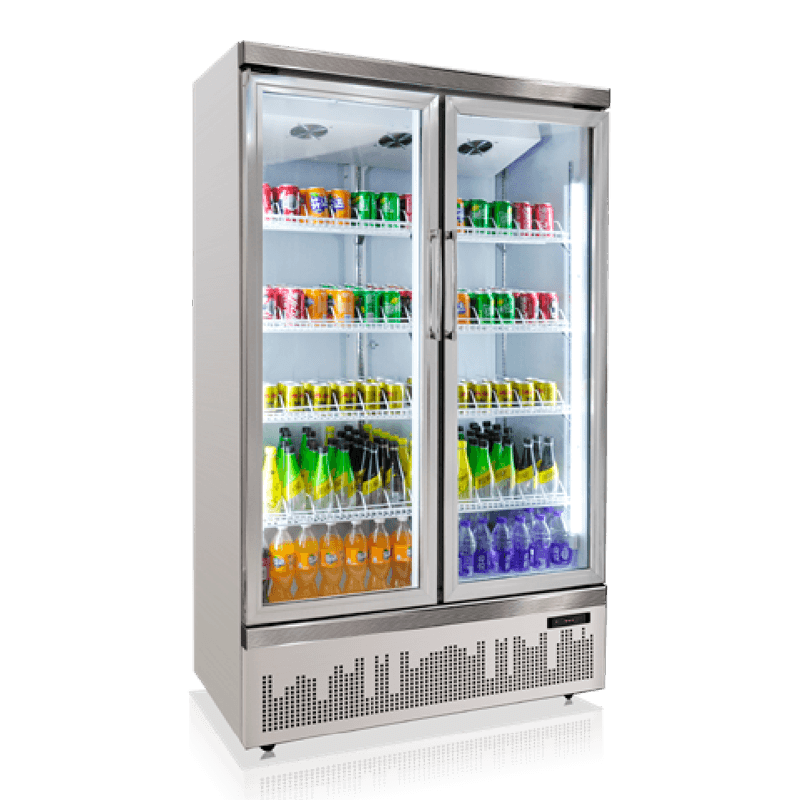
Direct‑cool systems are quieter but create temperature gradients; they suit small countertop gelato or beverage showcases where simplicity and silence outweigh the need for extreme uniformity.
5. Locking and Security
Sliding doors incorporate twin‑bolt key locks; hinged doors use cam locks with hardened steel shackles. For jewelry- and museum‑grade security, electronic RFID locks log every opening event and can integrate with the building’s access control. Tamper‑evident seals on access panels add another layer of accountability during loan exhibitions.
Industry‑Specific Selection Guide: Jewelry, Museums, High‑End Retail & Food
Each sector imposes a unique set of thermal, optical, and physical demands. The following recommendations translate the engineering principles above into actionable checklists.
Jewelry and Luxury Watches
- Glass: laminated anti‑smash, 8‑10 mm thick, with UV‑filtering interlayer preventing silver tarnish.
- Lighting: LED strips at 3000K, CRI ≥95, positioned at 45‑degree angles to minimize reflection.
- Climate: Ambient is sufficient, but a dehumidifier module (30‑40% RH) protects delicate watch oils.
- Security: Electronic lock with audit trail; optional vibration sensor tied to the alarm system.
- Typical Layout: Wall‑mounted towers or counter‑height showcases with flocked‑velvet interiors and hidden compartments.
Museums and Cultural Institutions
- Glass: low‑reflection glazing with ≥99% UV filtration; often requires Schott Mirogard or similar museum‑grade optical glass.
- Climate: Active micro‑climate generator maintaining 50% ±3% RH and 20°C ±1°C. Desiccant‑based units are preferred for silent operation.
- Lighting: Fiber‑optic or adjustable LED spots, maximum 50 lux for textiles, 150 lux for stone. CRI ≥97.
- Sealing: Silicone gaskets tested to less than one air exchange per day to protect from pollutants.
- Floor‑standing vitrines with base‑integrated climate systems dominate; portable modular vitrines serve traveling exhibitions.
High‑End Retail (Fashion, Cosmetics, Electronics)
- Configuration: Open‑front ambient cases with minimal framing encourage touch and interaction.
- Materials: Brushed stainless steel or champagne‑tinted anodized aluminum for brand alignment.
- Lighting: 4000‑4500K neutral white, high‑output LED panels behind etched glass diffusion layers to prevent glare.
- Flexibility: Modular shelving that can be repositioned without tools; integrated power for charging tablets or demo electronics.
- Security: Discreet magnetic locks activated by staff card; often combined with RFID‑enabled inventory tags.
Food and Gourmet Retail
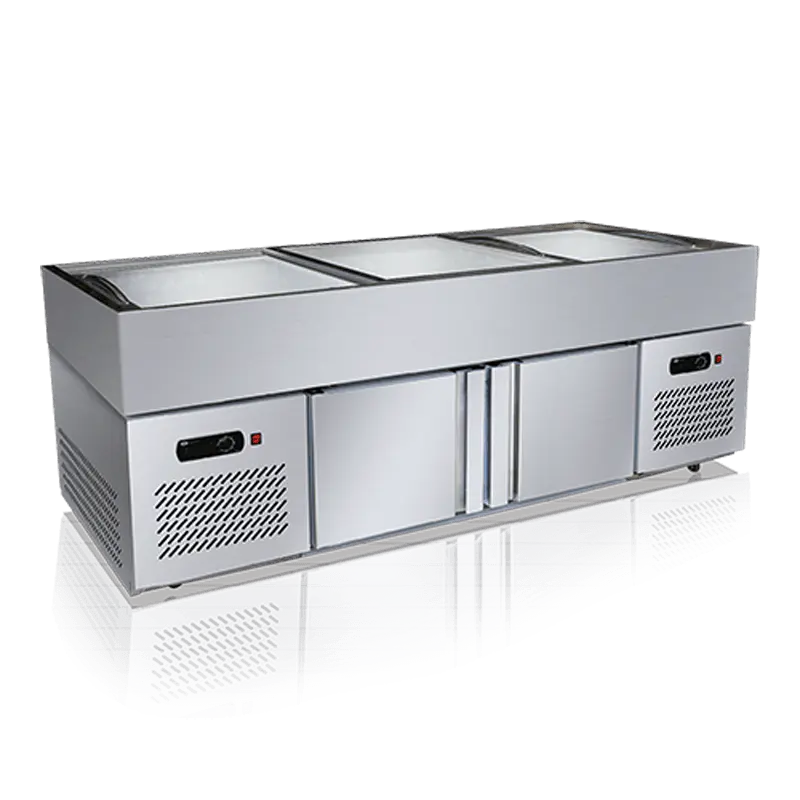
Refrigerated high‑end display cases in food settings do more than preserve—they spotlight freshness. Uniform cold air wraps every product shelf. For bakeries and patisseries, a purpose‑built cake display case with adjustable shelving and hot‑air defogging ensures every pastry looks irresistible even during the morning rush. Butcher and seafood counters require deep‑bottom configurations that hold ice beds or cold plates. Island‑type cases with rear‑loading doors increase staff efficiency while maintaining an unbroken customer view.
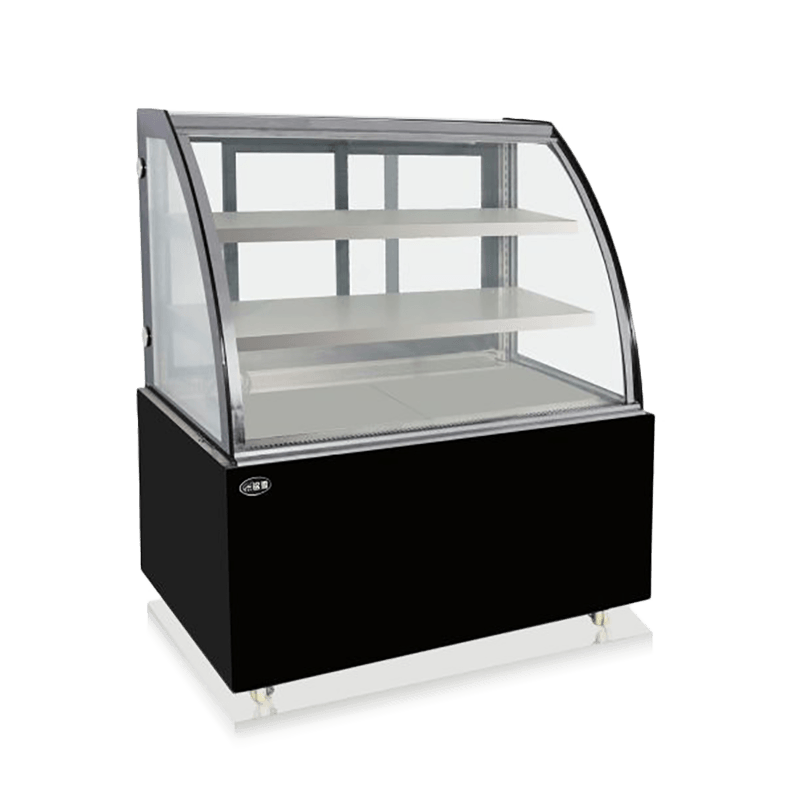
- Temperature: +2°C to +4°C for cream‑filled pastries and prepared salads; -18°C for ice cream and frozen confections.
- Food‑safe materials: AISI 304 stainless steel interiors, removable glide‑out trays, and NSF‑certified drain pans.
- Defogging: Air‑cooled models with an electric defogger on the front glass; heated wire or hot‑air curtain.
- Lighting: 5000K daylight spectrum to enhance the natural colors of fruits, vegetables, and meats.
Custom vs Standard High End Display Cases: Costs, Timelines & Decision Points
The choice between an off‑the‑shelf model and a fully bespoke unit is rarely black‑and‑white. Understanding the trade‑offs helps procurement teams negotiate smarter.
| Dimension | Standard (Stock) Solution | Custom‑Built Solution |
|---|---|---|
| Lead Time | 4‑6 weeks from order | 10‑16 weeks from drawing approval |
| Minimum Order Quantity | 1 unit (often with volume discount at 5+) | Typically 1‑5 units; very small runs incur surcharges |
| Price Premium | Baseline | +20% to +50% over a comparable standard unit |
| Design Flexibility | Fixed dimensions, limited finishes | Any dimension, custom veneers, embedded branding, specialized lighting layouts |
| Warranty | 12‑24 months parts and labor | Often 12‑18 months; negotiated extension possible |
Customization becomes necessary when architectural constraints demand non‑standard footprints, or when brand identity requires unique finishes and integrated digital screens. Museum‑grade climate control is almost always a custom engineering project because every artifact has a distinct preservation protocol.
For bulk purchasers—say a chain of 20 bakeries—negotiation strength comes from aggregating demand. Ask for a “master order” discount that locks pricing across multiple delivery dates. Request a two‑year spare parts kit included in the initial capital expense, and align the warranty start date with installation commissioning, not shipment. Semi‑custom approaches, where you select a core refrigerated chassis and add bespoke trims, cut lead time by 30% while preserving visual uniqueness.
From Installation to Daily Care: Extending the Life of Your Investment
A $6,000 refrigerated showcase can last 3‑5 years or 12‑15 years, depending entirely on how it is installed and maintained. The following routine turns high‑end cases into durable assets.
Installation Essentials
- Floor: must be perfectly level. A 2‑mm tilt alters air curtain geometry in island refrigerated cases, causing frost buildup and energy waste.
- Power: Dedicated circuits with proper grounding. Refrigerated units often draw 10‑16 A at 115 V; climate‑controlled vitrines require UPS backup to protect data loggers.
- Ventilation: Leave at least 100 mm of air gap behind the unit for compressor airflow. The hot‑air discharge must not recirculate into the intake grille.
Daily and Weekly Maintenance
- Wipe interior and exterior glass with a microfiber cloth and ammonia‑free cleaner. Ammonia damages anti‑reflective coatings and rubber gaskets.
- Check door gaskets for cracks or food debris; a failed gasket can increase refrigeration electricity consumption by 15‑25%.
- Inspect LED panels for flicker; replace dimming drivers before full failure.
- Empty and clean condensate drain pans to prevent mold (refrigerated cases).
Monthly and Quarterly Tasks
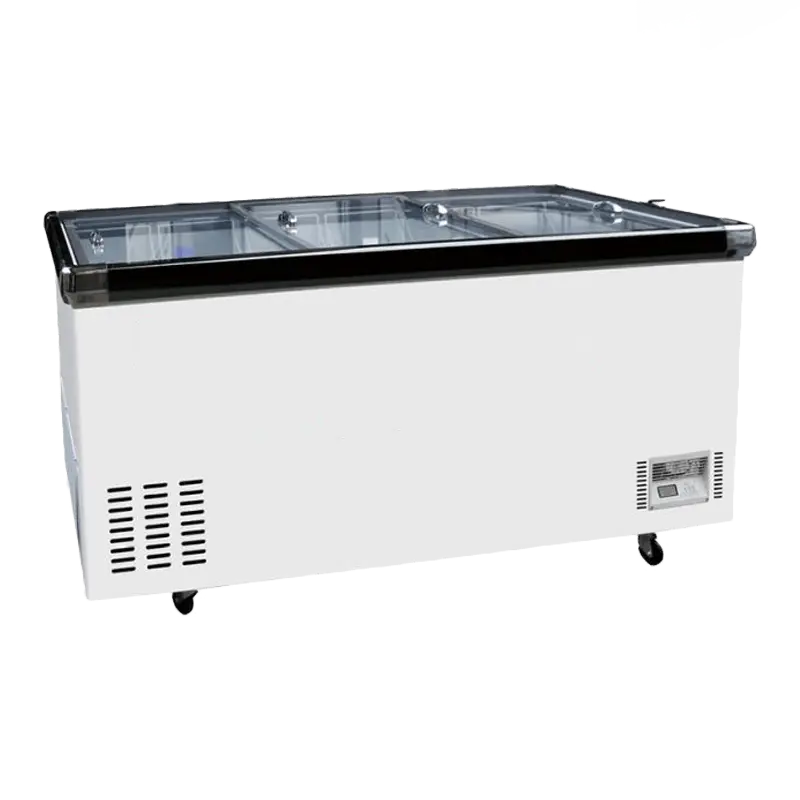
Brush or vacuum condenser coils gently. Deep‑bottom island refrigerated cases—like our deep‑bottom island refrigerated display cases—accumulate dust fastest because their coil intake sits near floor level. A clogged condenser pushes compressor head pressure up, tripling the risk of premature failure. Every quarter, verify the defrost heater and drip‑time logic in frozen display units to prevent ice dam formation.
Annual Professional Service
Contract a refrigeration technician to measure superheat and subcooling, check refrigerant charge, and calibrate thermostats and hygrostats. For museum vitrines, replace silica gel or desiccant cartridges and re‑validate the internal micro‑climate with a calibrated data logger. Document all service actions; a complete maintenance log increases the resale value of premium display equipment by 10‑15% when upgrading.
Selecting high end display cases is a capital decision with direct impact on product longevity, theft prevention, and sales conversion. By matching the case category to the product’s physical needs, scrutinizing the five engineering pillars, and applying industry‑specific checklists, you transform a generic furniture purchase into a strategic store asset. Whether you need an ambient jewelry tower, a museum‑grade vitrine, or a refrigerated food island, the principles remain the same: demand third‑party certifications, pilot a single unit before committing to a fleet, and negotiate maintenance support as firmly as you negotiate the sticker price. The investment pays for itself—not in years, but in the daily uplift of every customer who stops, looks, and buys.