
 English
 русский
 Español
 عربى
عربى

Deli Case Buying Guide: Air-Cooled vs. Static, Sizing, and Door Styles
Content
- 1 Why the Right Deli Case Matters for Your Business
- 2 Deli Case Cooling Technology: Air-Cooled vs. Static Cooling
- 3 Door Styles Compared: Curved Glass, Sliding, Swing, and Open
- 4 Sizing Your Deli Case: A 3-Step Decision Matrix
- 5 Energy Efficiency & Refrigerant Compliance: R290 vs. R404A
- 6 Installation Requirements: Space, Power, and Ventilation
- 7 Maintenance Tips to Extend Your Deli Case Lifespan
Why the Right Deli Case Matters for Your Business
A Wisconsin cheese shop had to discard $9,000 of inventory after a deli case malfunction caused temperature swings of 12°F in a single afternoon. That loss didn't come from a broken unit—it came from a case that was too small and couldn't maintain stable temperatures during a July heatwave. The right deli case is not just a display fixture; it's a profit-protection tool.
When you match case technology and sizing to your specific product mix, you cut spoilage, increase impulse purchases, and reduce your monthly energy bill. Three operational dimensions shift immediately based on your equipment choice:
- Product freshness and shelf life. A properly selected deli case keeps meat, seafood, and cheeses at the exact temperature and humidity they need. The difference can mean a 20% reduction in daily shrink.
- Customer buying behavior. Clear, well-lit glass and an intuitive door style boost impulse sales by as much as 15% in some supermarket layouts, because shoppers see and reach products with less friction.
- Energy and maintenance overhead. An oversized case wastes electricity; an undersized one runs constantly and fails early. Annual operating costs can swing $400–$1,200 per linear foot depending on efficiency choices.
This guide delivers a decision framework that equipment buyers at butcher shops, specialty delis, and grocery chains use to spec the right deli case the first time.
Deli Case Cooling Technology: Air-Cooled vs. Static Cooling
Cooling method is the single biggest technical differentiator. Air-cooled (forced-air) systems use fans to circulate cold air across an evaporator coil and through the display area. Static cooling—often called gravity coil—relies on natural convection: cold air sinks, warm air rises, and no fan moves air. The trade-offs directly affect spoilage rates and labor.
In a commercial deli, static coils maintain higher humidity levels because airflow is minimal, making them ideal for unwrapped cheeses and cured meats that dry out quickly. But the temperature is less uniform; the bottom shelf can be 5°F colder than the top. Air-cooled cases hold a tight +/-2°F across the entire deck, which is critical for raw seafood and fresh-cut meat that must stay below 40°F at all times.
A well-engineered air-cooled deli display case also automates defrost cycles—typically every six to eight hours—so staff aren't scraping ice. Static models often require daily manual defrosting, adding 15–20 minutes of labor per unit each morning.
| Factor | Air-Cooled (Forced-Air) | Static (Gravity Coil) |
|---|---|---|
| Temperature uniformity | ±2°F | ±5°F |
| Humidity retention | Moderate | High |
| Defrost method | Automatic, 6–8 hr cycle | Manual, daily |
| Ideal products | Raw meat, seafood, poultry | Cheeses, cured meats, deli salads |
| Energy use (kWh/ft/day) | 1.2–1.5 | 0.9–1.2 |
| Noise level | Slightly higher (fan hum) | Quiet |
For a butcher counter that turns over fresh cuts every few hours, the extra energy cost of air-cooled—roughly $90 more per year for a 6-foot unit—pays for itself in reduced waste. Cheese shops and European-style charcuteries often prefer static models to preserve texture, even if it means accepting manual defrost.
Door Styles Compared: Curved Glass, Sliding, Swing, and Open
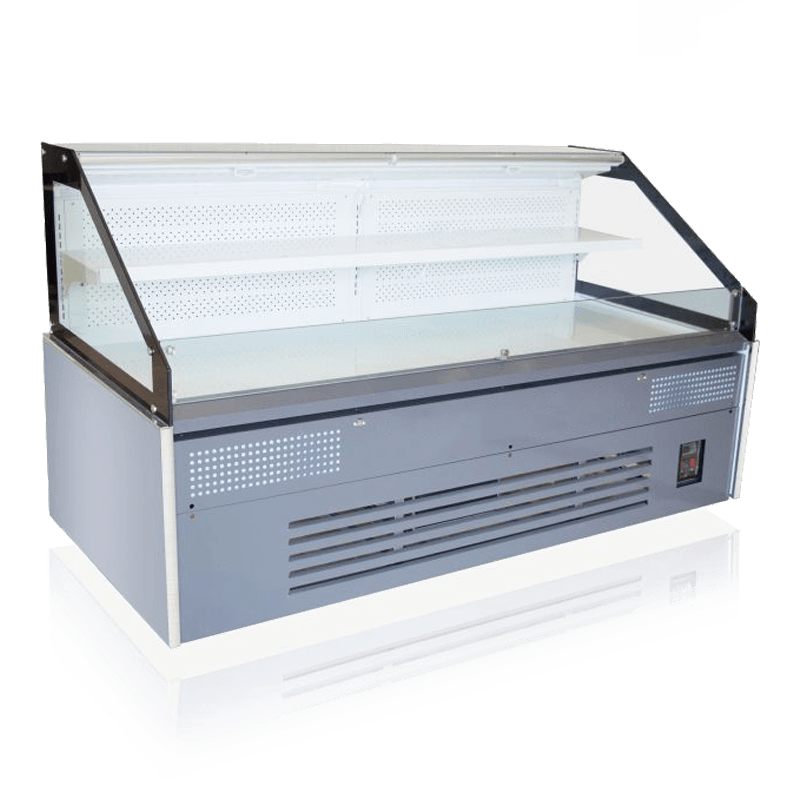
Door configuration shapes customer interaction and energy performance. A curved glass front produces a panoramic view that studies show lifts impulse grab rates by up to 12%, but it adds 20–30% to the unit price. Sliding glass doors reduce energy consumption by 40% compared to open cases, yet they introduce a physical barrier that some shoppers ignore. The right choice hinges on your traffic pattern and product price point.
| Door Type | Visual Appeal | Energy Efficiency | Best Application | Price Range (per linear ft) |
|---|---|---|---|---|
| Curved glass front, sliding doors | Excellent | High (as unit is sealed) | High-end deli, seafood counter | $400–$700 |
| Straight glass sliding doors | Good | High | Mid-market supermarket deli | $300–$500 |
| Swing doors (hinged) | Moderate | Moderate (greater air exchange) | Full-service counter with staff access | $250–$450 |
| Open, no doors | Very high (unobstructed) | Lowest (constant cold well) | Self-serve grab-and-go, high turnover | $200–$400 (plus higher energy cost) |
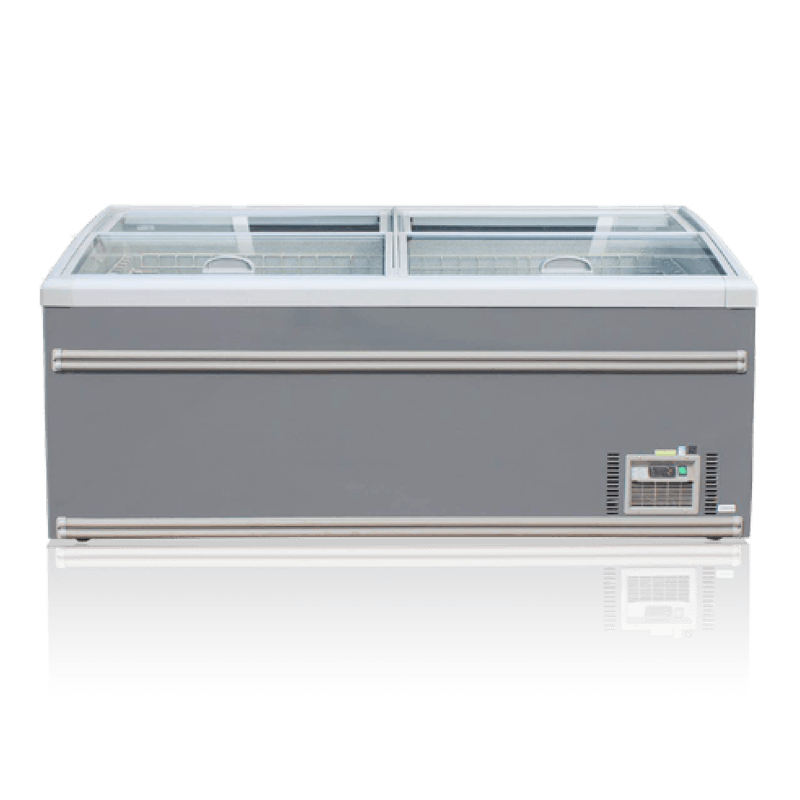
Open cases demand a careful floor plan. They work well in high-volume settings where product rotation is under two hours, but the cold air spill increases compressor runtime and can chill the aisle uncomfortably. For self-serve packaged meats or dairy, island refrigerated display cases offer 360° access while containing cold air in a central well, blending visibility and efficiency.
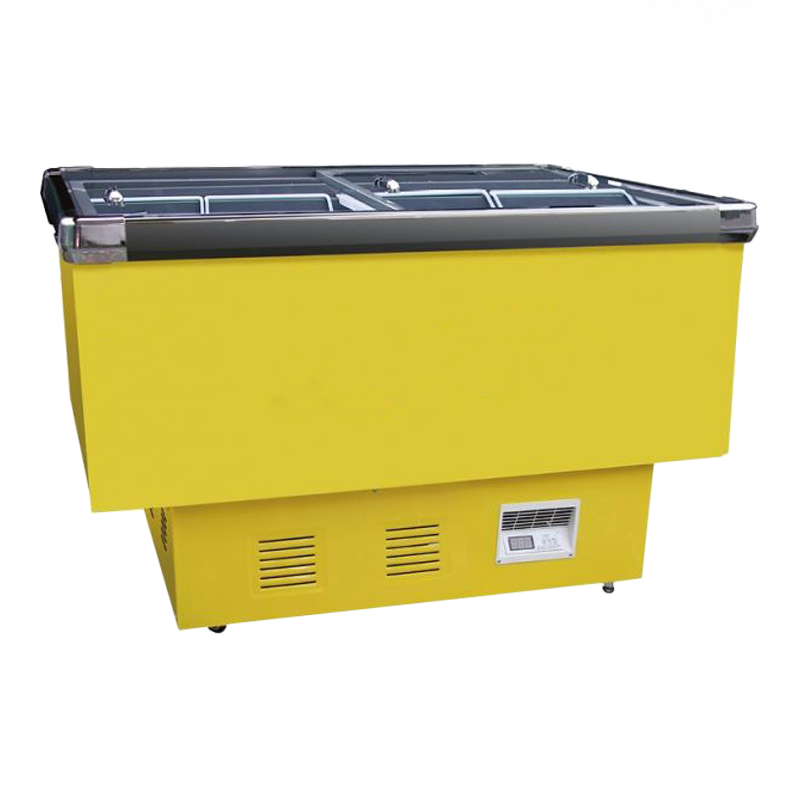
Sliding glass doors are the energy workhorse. In a test conducted by a regional grocery chain, replacing a 12-foot open deli island with a sliding-door unit cut energy consumption by 38% and reduced compressor cycle count by 50%, all while maintaining the same product temperature. The glass needs daily cleaning to prevent fingerprint buildup, but the payback comes within 18 months from utility savings.
Sizing Your Deli Case: A 3-Step Decision Matrix
Undersized cases force overcrowding and temperature dead zones. Oversized cases waste floor space and energy. Use this three-step process to land on the right footprint.
- Estimate daily customer traffic. Count the number of deli counter interactions per hour during peak periods. A small shop might serve 20–30 customers per hour; a supermarket deli handles 80–120.
- Calculate linear feet by product density. Each foot of deli case can display roughly 15–25 lbs of sliced meat or 30–40 lbs of whole cuts, depending on tray depth. For a mix, assume 20 lbs per foot. If your daily peak demand is 200 lbs, you need at least 10 linear feet. Add 20% buffer for restocking and visual breaks.
- Factor in case depth and configuration. A standard deli case is 36–48 inches deep. Deeper cases (48 inches) increase capacity without lengthening the footprint, but they require more labor to reach back trays. Curved fronts reduce usable depth by 4–6 inches due to curvature.
| Store Type | Peak Daily Customers at Deli | Recommended Linear Feet | Suggested Capacity (ft³) | Typical Configuration |
|---|---|---|---|---|
| Small specialty deli / butcher shop | 150–300 | 4–8 feet | 12–30 | Single-service case, sliding doors |
| Medium supermarket | 500–800 | 10–16 feet | 40–70 | Multi-deck straight glass, split service/self-serve |
| Large fresh-food department | 1,000+ | 18–30 feet | 80–150 | Curved glass multi-deck with rear storage, open islands |
A delicatessen refrigerated display case tailored to sliced meats and cheeses often integrates humidity control better than a general-purpose meat case. If your product split is 60% cured meats and 40% raw cuts, consider two separate cases with different cooling technologies instead of forcing everything into one oversized unit.
Energy Efficiency & Refrigerant Compliance: R290 vs. R404A
Refrigerant choice directly impacts your utility bill and regulatory risk. As of 2026, the EPA's A2L rulemaking phase is pushing commercial refrigeration away from high-GWP HFCs like R404A (GWP 3,922). R290—purified propane—has a GWP of just 3 and delivers up to 15% higher energy efficiency ratio (EER) in deli case applications. This shift isn't optional for new equipment in many states.
| Parameter | R290 (Propane) | R404A |
|---|---|---|
| Global Warming Potential (GWP) | 3 | 3,922 |
| Energy Efficiency Ratio (EER) | 5.8–6.4 | 5.0–5.4 |
| Annual energy cost (approx.) | $480 | $560 |
| Safety classification | A3 (flammable) | A1 (non-flammable) |
| Charge size limit (per circuit) | 150g–500g depending on application | No practical limit |
| Regulatory outlook | Compliant & future-proof | Phased down under AIM Act; service restrictions increasing |
The operating cost difference—roughly $80 per year for an 8-foot case—adds up to $800 over a decade, not counting potential carbon taxes or refrigerant replacement costs. New deli cases built for R290 come with factory-sealed systems and safety mitigations that make the flammable classification a non-issue in well-ventilated retail spaces. If you're buying a case that will run for the next 8–10 years, specifying R290 today avoids a forced retrofit later.
Installation Requirements: Space, Power, and Ventilation
Even the best deli case will fail prematurely if it's squeezed into a tight corner with no airflow. Manufacturer warranties often void coverage when minimum clearances are ignored. Before signing a purchase order, confirm these four installation parameters.
- Ventilation clearances: Top 12 inches, rear 6 inches, sides 2–4 inches. Cases with remote compressors require additional clearance for refrigerant lines and heat rejection. Built-in self-contained units need the rear vent path to be unobstructed; placing a deli case directly against a wall can raise condensing temperature by 15°F, cutting compressor life by 20%.
- Floor load capacity: A fully loaded 8-foot deli case weighs roughly 800–1,200 lbs, or 50–75 lbs per square foot. Older store floors may need reinforcement if multiple cases are lined up.
- Electrical supply: Most self-contained deli cases run on 208/230V single-phase, 15–20 amp dedicated circuits. Large remote models may require 3-phase 208V, 30 amp. Always check the nameplate rating and use a dedicated circuit to avoid voltage drop from other equipment.
- Ambient conditions: The case is designed for an environment of 75°F and 55% relative humidity. If your store regularly exceeds 80°F at the deli counter, the compressor will work harder and may not maintain safe product temperatures. Plan for supplemental air conditioning in the department.
Spend an extra hour with a level and tape measure before the unit arrives. Thirty percent of service calls that manufacturers receive within the first year trace back to improper installation—not component defects.
Maintenance Tips to Extend Your Deli Case Lifespan
A deli case that runs 12–16 hours a day accumulates dust, grease, and food debris that silently erode performance. Stick to this maintenance calendar to gain an extra 2–3 years of reliable service and prevent surprise breakdowns during the Saturday lunch rush.
- Daily: Wipe down interior surfaces with a mild cleaner approved for food contact. Clear any product spills near door tracks and drain lines. Check that sliding doors move freely.
- Weekly: Inspect door gaskets for tears or gaps using a dollar-bill test—close the bill in the door and pull; it should resist. Clean glass with ammonia-free cleaner to avoid clouding.
- Monthly: Vacuum the condenser coil and fan guard. Accumulated dust reduces heat rejection and can spike energy use by 10–15%. Verify that drain pans are unobstructed.
- Quarterly: Brush condenser fins with a soft bristle brush. Check evaporator coil for ice buildup; if ice is present, the defrost timer or sensor may need adjustment. Test temperature sensors against a calibrated thermometer.
- Annually: Schedule a professional technician to measure compressor amp draw, inspect refrigerant charge, and test control board diagnostics. Replace door hinges and rollers if they show wear.
Keep a simple log near the case: date, coil cleaned yes/no, temperature readings, and any noise changes. When a compressor starts drawing 15% more amps than its baseline, you have a two-week window to fix a failing start capacitor or dirty coil before the entire unit trips.