
 English
 русский
 Español
 عربى
عربى

Deep Freezer vs. Chest Freezer: Real Differences & Best Choice
Content
- 1 Deep Freezer vs. Chest Freezer: the real difference in plain terms
- 2 How they differ: shape, access, and how you actually use them
- 3 Capacity and footprint: why chest models often “hold more than they look”
- 4 Temperature and food quality: what “deep” can imply (and what it does not)
- 5 Energy use and running cost: why chest freezers are often more efficient
- 6 Organization and usability: the trade-off most people feel after purchase
- 7 Placement and environment: the garage test and why it changes your choice
- 8 Which should you buy? practical scenarios that map to the right freezer
Deep Freezer vs. Chest Freezer: the real difference in plain terms
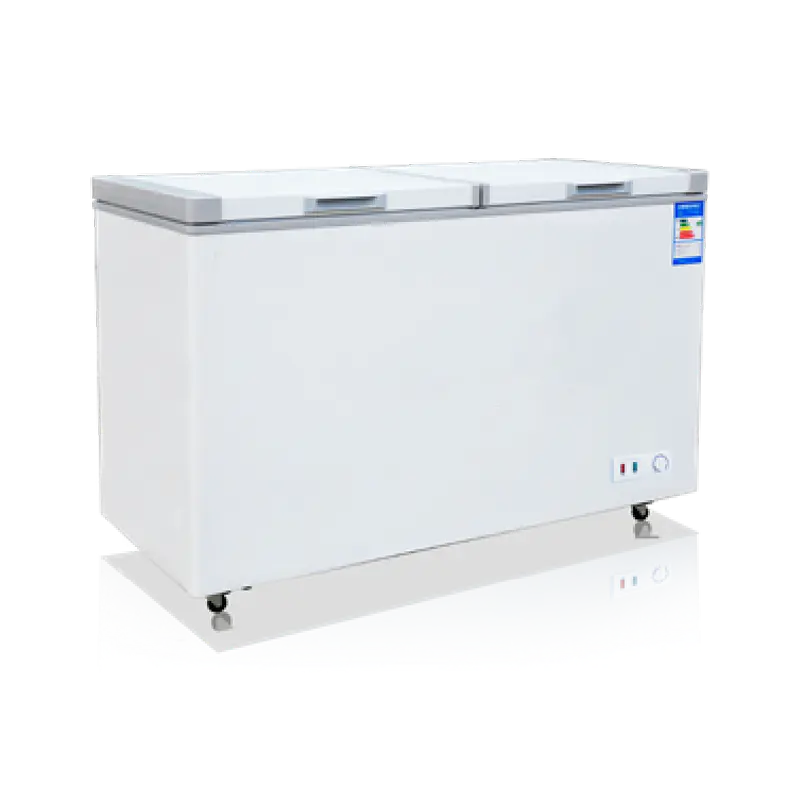
A chest freezer is a specific freezer style: a horizontal box with a top-opening lid. A deep freezer is usually a marketing term for a standalone freezer (not the freezer compartment in a fridge). In everyday shopping, “deep freezer” often refers to a chest freezer, but it can also include upright freezers.
Where confusion comes from: some sellers use “deep freezer” to imply colder operation or long-term bulk storage. In reality, most residential freezers are designed to hold food safely around 0°F / -18°C. Some models can go colder (for example, down to roughly -10°F to -20°F), but that capability depends on the specific model—not on whether it is “deep” or “chest.”
How they differ: shape, access, and how you actually use them
Chest freezer (horizontal)
- Opens from the top; cold air “stays in” better when the lid is open.
- Typically offers more usable capacity per dollar and per square foot of floor space.
- Best for bulk storage (quarter/half cow, multiple cases of meat, seasonal garden harvest).
- Harder to organize: items can get buried unless you use bins and an inventory method.
“Deep freezer” (standalone freezer, any style)
- Could be a chest freezer or an upright freezer; always verify the product type and dimensions.
- May include features like “garage ready,” “fast freeze,” or extended temperature range—these are model-specific.
- Often purchased for longer-term storage beyond what a fridge-freezer can hold.
Practical takeaway: If a listing says “deep freezer,” confirm whether it is chest or upright, then compare capacity (cu ft), energy use (kWh/year), temperature range, and whether it is suitable for your placement (especially garages).
Capacity and footprint: why chest models often “hold more than they look”
Freezer capacity is usually listed in cubic feet (cu ft). For a quick sense of scale, a common rule of thumb is about 1 cu ft per 30–40 lb of meat (packaging and shape matter). That means a 10 cu ft unit might practically hold roughly 250–330 lb of mixed items.
Because chest freezers are wide and low, they often deliver more internal volume for the same floor footprint than uprights. This is why “deep freezer” shoppers who want maximum bulk storage often end up choosing a chest freezer.
| Capacity (cu ft) | Common use case | What it comfortably supports |
|---|---|---|
| 3–5 | Apartment or overflow | Meal prep, frozen fruit/veg, extra staples |
| 7–10 | Family bulk buying | Warehouse clubs, seasonal cooking, hunting trips |
| 12–20+ | Serious bulk storage | Large harvests, frequent entertaining, large meat shares |
Decision tip: If you routinely store bulky, irregular items (turkeys, large cuts, boxes), chest freezers are usually more forgiving. If you store many small items you need to “see at a glance,” upright styles (often sold as “deep freezers”) can reduce food loss from forgotten items.
Temperature and food quality: what “deep” can imply (and what it does not)
For food safety and long-term storage, the key benchmark is maintaining 0°F / -18°C or colder. Many standalone freezers—chest or upright—are engineered to hold that reliably. “Deep freezer” does not automatically mean “colder than normal.”
When lower temperatures matter
- If you freeze large quantities at once, look for a “fast freeze/super freeze” mode or higher freezing capacity; this helps reduce ice crystal size and can improve texture in meats and baked goods.
- If the unit can hold -10°F to -20°F (model-specific), it may better preserve quality for very long storage, but energy use may rise and it is often unnecessary for everyday households.
Bottom line: Prioritize stable temperature control, good door/lid seals, and adequate airflow around the unit over the “deep freezer” label.
Energy use and running cost: why chest freezers are often more efficient
Energy consumption varies by size, insulation, compressor design, and ambient temperature. However, chest freezers often have an advantage because cold air does not spill out as easily when opened. In practice, that can translate into fewer compressor cycles after you access food.
As a rough planning range, many modern mid-size standalone freezers operate in the ballpark of 200–500 kWh/year, with larger units higher. To estimate annual cost, multiply the unit’s kWh/year by your electricity rate. For example: 350 kWh/year × $0.20/kWh ≈ $70/year.
Cost-control moves that actually work
- Keep it 70–85% full (thermal mass helps), but leave space for airflow and baskets.
- Set to 0°F unless you have a specific reason to go colder.
- Limit “lid-open time” and use bins so you can grab items quickly.
- Allow proper clearance around vents/coils per the manual to prevent inefficient heat rejection.
Organization and usability: the trade-off most people feel after purchase
This is the decisive factor for many households. Chest freezers can be extremely space-efficient, but they can also become a “frozen pile” without a system. Upright freezers (often marketed as deep freezers) are easier to manage day-to-day.
| Factor | Chest freezer | Upright freezer |
|---|---|---|
| Find small items | Harder unless binned | Easier with shelves |
| Bulk, awkward items | Excellent | Good but shelf-limited |
| Defrost/maintenance | Often manual (model-specific) | More auto-defrost options |
| Floor space efficiency | Very high | Moderate |
A simple chest-freezer organization system
- Assign zones (top layer: weekly items; bottom: long-term storage).
- Use 4–6 bins labeled by category (meat, veg, bread, prepared meals, desserts).
- Keep a quick inventory list on paper or a note app; update when you add/remove items.
- Rotate using “first in, first out” so older items are consumed earlier.
Placement and environment: the garage test and why it changes your choice
If you plan to place a freezer in a garage, shed, or other unconditioned space, verify that the model is rated for those ambient conditions. Very hot summers can increase energy use; very cold winters can cause some units to cycle differently and may affect performance depending on design.
- Look for “garage ready” or an explicit ambient temperature operating range in the specifications.
- Plan clearance: many units need a few inches around vents/coils for airflow.
- Avoid direct sun and tight enclosures; both raise compressor workload.
- Use a dedicated outlet; avoid light-duty extension cords.
Key point: A “deep freezer” label won’t tell you garage suitability—only the model’s rated operating conditions will.
Which should you buy? practical scenarios that map to the right freezer
Choose a chest freezer if you prioritize
- Maximum capacity for the money and floor space
- Bulk items (large cuts, cases, seasonal harvest)
- Often better real-world efficiency when opened frequently
Choose an upright-style “deep freezer” if you prioritize
- Everyday access and visibility (less forgotten food)
- Organization via shelves and door bins
- Tighter footprint width in narrow rooms (even if it is taller)
Final recommendation: Treat “deep freezer” as a category label, not a design. If you want the classic bulk-storage tool, buy a chest freezer. If you want convenience and organization, choose an upright standalone freezer marketed as a deep freezer, and compare specs rather than names.