
 English
 русский
 Español
 عربى
عربى

Commercial Refrigeration Equipment for Hotels, Restaurants & Supermarkets
Content
- 1 Why Equipment Choice Matters More Than You Think
- 2 Commercial Refrigeration for Restaurants: Speed and Accessibility First
- 3 Commercial Refrigeration for Hotels: Versatility Across Multiple Departments
- 4 Commercial Refrigeration for Supermarkets: Display, Merchandising, and Energy Efficiency
- 5 Key Factors to Compare Before You Buy
- 6 How to Match Equipment to Your Specific Operation
- 7 A Note on Working With Suppliers vs. Generic Distributors
Why Equipment Choice Matters More Than You Think
Choosing the wrong refrigeration unit is one of the most common — and costly — mistakes we see buyers make. A display cooler that works perfectly in a hotel breakfast area may be completely inadequate for a high-turnover supermarket aisle. A reach-in freezer suited to a restaurant kitchen may be undersized or poorly configured for a hotel banquet prep zone. The three sectors — hotels, restaurants, and supermarkets — each have distinct operational rhythms, food safety requirements, and spatial constraints that directly determine which commercial refrigeration equipment fits best.
As a manufacturer and supplier with years of experience serving buyers across all three sectors, we want to walk you through the practical distinctions — so you can make a confident, well-informed purchasing decision rather than learning through expensive trial and error.
Commercial Refrigeration for Restaurants: Speed and Accessibility First
Restaurant kitchens are defined by urgency. During a lunch or dinner rush, kitchen staff cannot afford to waste time searching for ingredients. Every refrigeration unit placed in a restaurant kitchen must prioritize fast access, precise temperature control, and enough capacity to support continuous service without restocking mid-shift.
Reach-In Refrigerators and Freezers
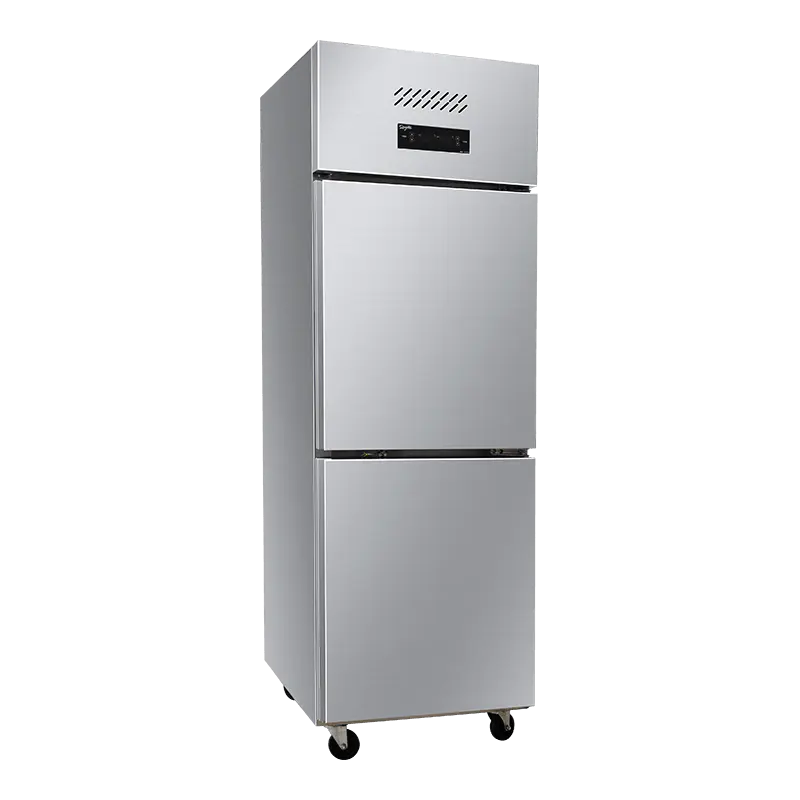
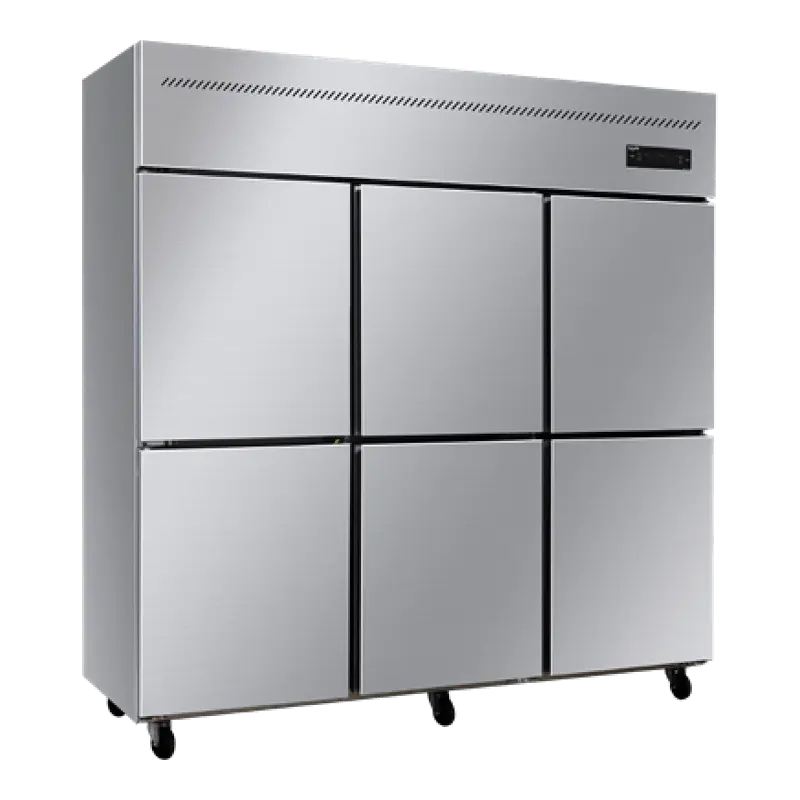
Reach-in refrigerators are the backbone of most restaurant kitchens. A standard two-section reach-in unit offers 40–50 cubic feet of storage, which is typically sufficient for a mid-sized restaurant serving 80–150 covers per service. They maintain temperatures between 33°F and 40°F (0.5°C–4.4°C), meeting FDA Food Code requirements. Stainless steel interiors and exteriors are standard — easy to sanitize and durable under daily abuse.
Undercounter and Worktop Refrigerators
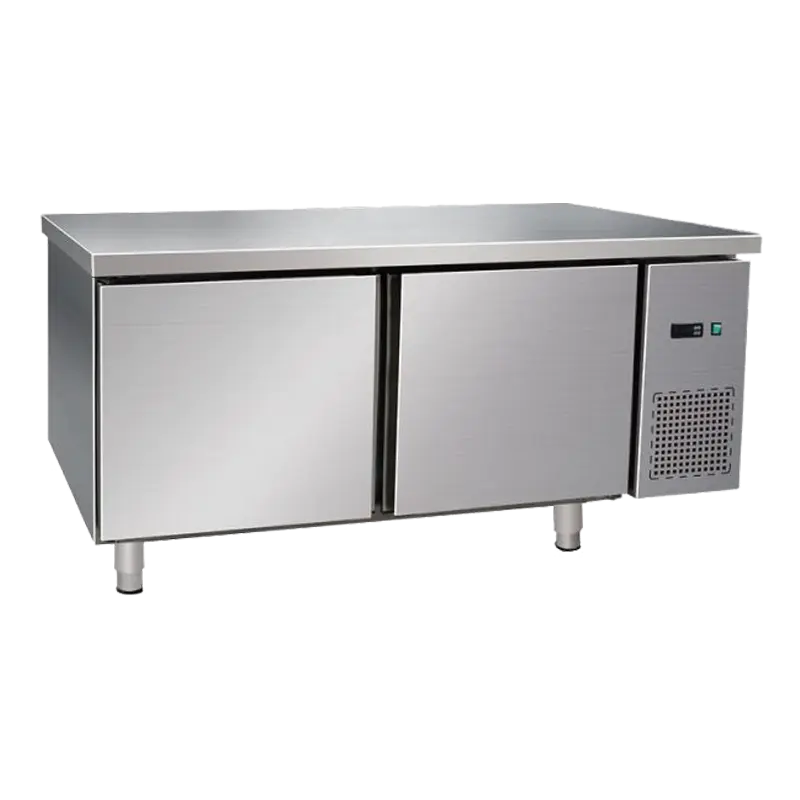
For stations like the cold line, bar area, or pastry section, undercounter units keep ingredients at arm's reach without occupying floor space needed for movement. Worktop refrigerators go one step further — the flat top doubles as a food prep surface, saving both space and equipment cost. These are especially effective in compact urban restaurant kitchens where every square meter counts.
Sandwich and Pizza Prep Refrigerators
If your menu includes made-to-order items like sandwiches, salads, or pizzas, a dedicated prep refrigerator is a practical necessity rather than a luxury. These units combine a refrigerated ingredient rail on top with storage drawers or shelves below. They reduce ingredient-to-plate time significantly by keeping toppings at safe temperature while positioned directly at the assembly station.
| Equipment Type | Best Application | Typical Temp Range |
|---|---|---|
| Reach-In Refrigerator | Main ingredient storage | 33°F – 40°F (0.5°C – 4.4°C) |
| Undercounter Refrigerator | Line stations, bar areas | 33°F – 40°F (0.5°C – 4.4°C) |
| Sandwich/Pizza Prep Unit | Assembly line stations | 35°F – 41°F (1.7°C – 5°C) |
| Reach-In Freezer | Protein and frozen goods | -10°F – 5°F (-23°C – -15°C) |
For restaurants with larger output or walk-in prep areas, a walk-in cooler or freezer provides the bulk storage needed to minimize daily deliveries and reduce food cost volatility. We offer a range of commercial refrigeration products designed for restaurant environments — from compact undercounter units to full-scale reach-in systems.
Commercial Refrigeration for Hotels: Versatility Across Multiple Departments
Hotels present a more complex refrigeration challenge than standalone restaurants because multiple departments operate simultaneously — each with its own temperature requirements, usage patterns, and aesthetic standards. The main kitchen, banquet preparation area, minibar service, in-room refreshment stations, lobby café, and employee dining facility may all require different types of equipment.
Back-of-House: High-Capacity Storage Units
For the main production kitchen and banquet prep areas, the priority is volume and reliability. Walk-in coolers are often the most appropriate solution for hotels serving over 200 guests per meal period. A well-designed walk-in cooler can store multiple days' worth of perishables, reducing the frequency of supplier deliveries and giving the kitchen team more inventory flexibility. Walk-in coolers in hotel settings commonly range from 6' × 8' to 10' × 20' or larger, depending on the property's food and beverage volume.
Front-of-House: Display and Buffet Refrigeration
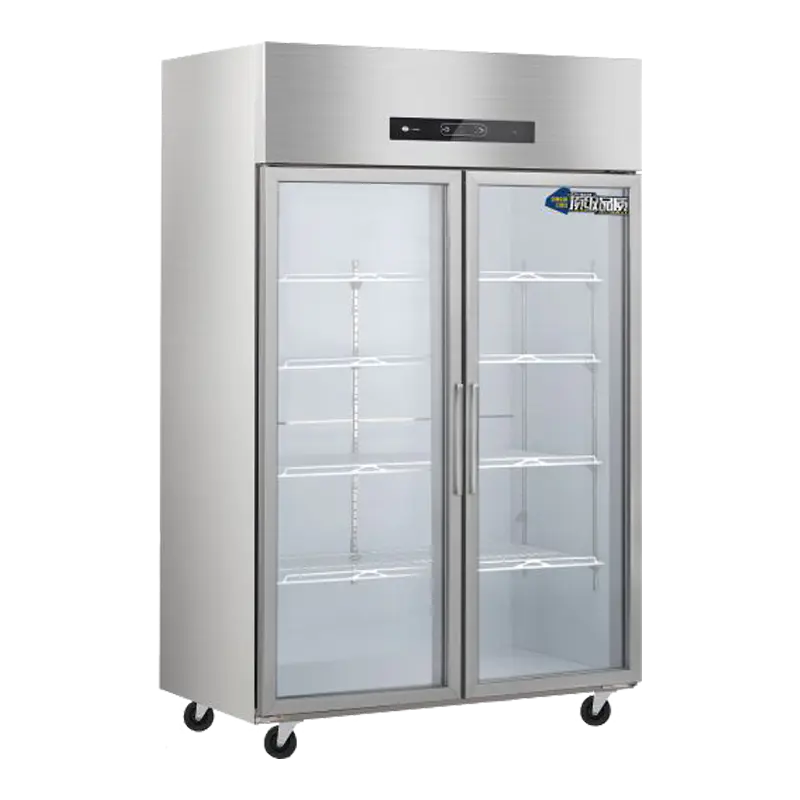
In hotel dining rooms, lobby cafés, and breakfast buffet stations, refrigeration equipment is visible to guests — meaning aesthetics matter as much as function. Glass door display refrigerators and open-air merchandisers serve both roles: they keep products at safe temperatures while presenting them attractively. A hotel breakfast station, for example, may use a glass door refrigerator to display yogurts, cheeses, cold cuts, and juices in an organized and appealing format.
In-Room Minibar and Miniature Refrigeration
Guest rooms require compact refrigeration — typically 1.5 to 3 cubic feet — that operates quietly to avoid disturbing sleep. Noise levels below 40 dB are generally expected for in-room units. These units need to be energy-efficient as well, since a 300-room hotel may have several hundred minibar units running 24 hours a day. The cumulative energy cost difference between a standard unit and an ENERGY STAR-certified model can be substantial over a year of operation.
Bar and Beverage Refrigeration
Hotel bars require back-bar refrigerators and bottle coolers that maintain precise beverage temperatures — typically 35°F–45°F (1.7°C–7.2°C) for beer and white wine — while contributing to the visual design of the bar. Undercounter back-bar units with glass doors allow bartenders to quickly identify and access bottles without opening the wrong section, improving service speed during high-traffic evening periods.
Commercial Refrigeration for Supermarkets: Display, Merchandising, and Energy Efficiency
Supermarkets have the most demanding refrigeration requirements of the three sectors — both in scale and in the diversity of temperature zones required. A mid-sized supermarket may operate anywhere from 150 to 400 linear feet of refrigerated display cases, plus walk-in coolers and freezers in the back room. The challenge is to display products attractively, minimize energy consumption, and maintain food safety compliance — simultaneously.
Multideck Open Display Cases
Multideck open-front display cases are the most visible refrigeration equipment in a supermarket — lining the dairy, deli, produce, and packaged meat aisles. They allow shoppers to access products without opening doors, which improves the shopping experience but increases energy use due to open-air cooling. Modern multideck cases with night curtains or low-E glass doors can reduce energy consumption by 30–40% compared to traditional open cases, a meaningful saving when running hundreds of linear feet.
Glass Door Upright Merchandisers
For beverages, dairy products, and refrigerated prepared foods, upright glass door merchandisers are the standard choice. They provide full product visibility while maintaining consistent temperature throughout the cabinet. LED internal lighting not only improves product presentation but also generates less heat than fluorescent alternatives, reducing the cooling load on the compressor.
Chest and Island Freezer Cases
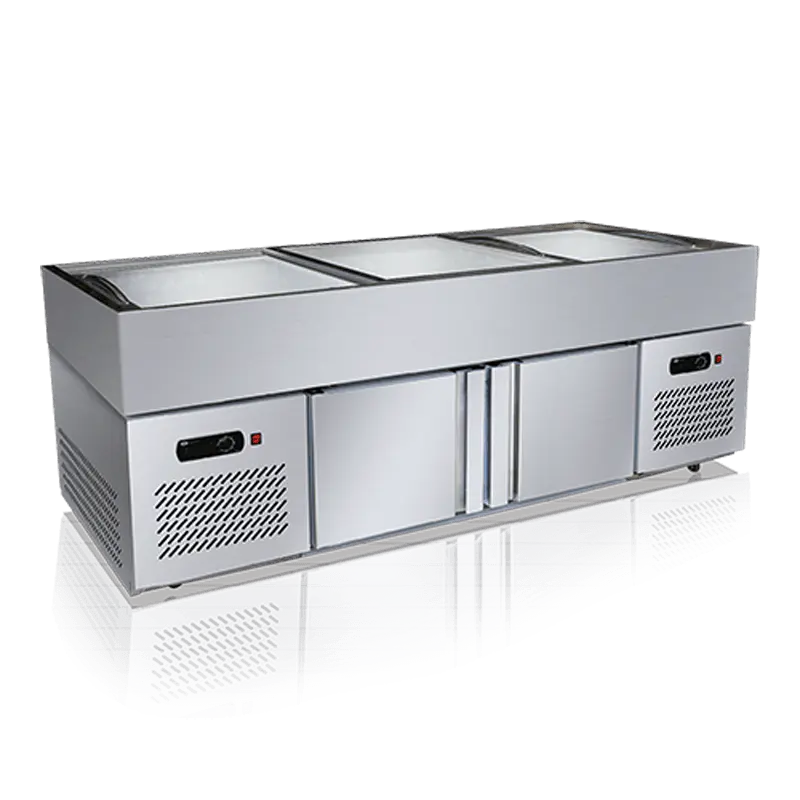
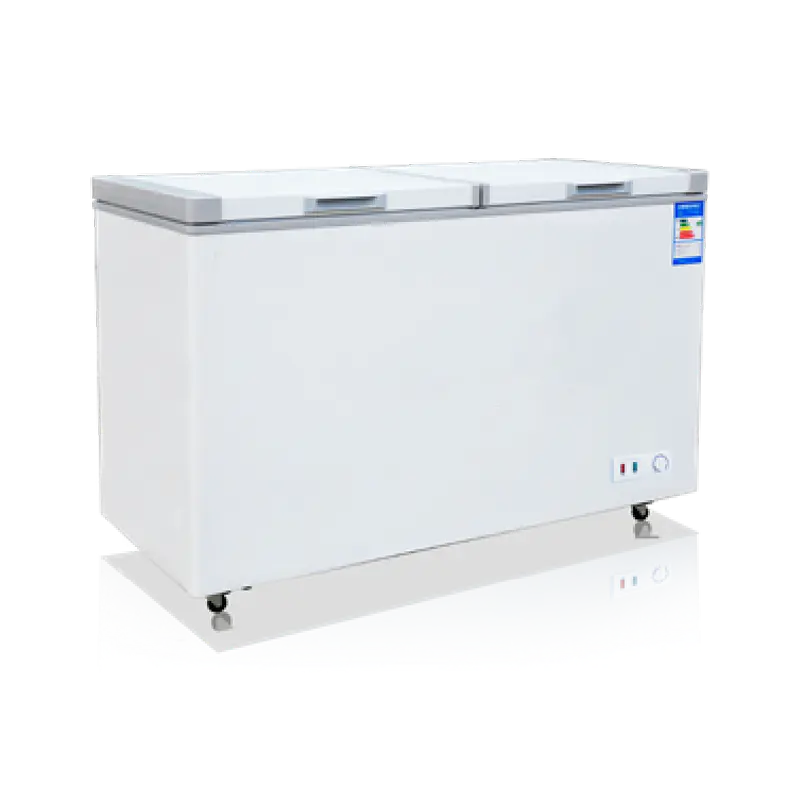
Chest freezer cases are commonly used in supermarket frozen food aisles for bulk items like frozen vegetables, ice cream, and seafood. Island freezer cases with transparent lids allow shoppers to view products from above while retaining cold air efficiently. For high-volume categories like ice cream, open-top island cases with a flat layout increase browsability and impulse purchases — a measurable driver of category sales.
Walk-In Coolers and Freezers for Back-Room Storage
Behind the sales floor, supermarkets rely on large walk-in coolers and freezers to buffer stock between deliveries. A typical full-service supermarket back room may include 1,000–3,000 cubic feet of walk-in cooler and freezer space. Efficient racking systems and door strip curtains are critical to maintaining consistent temperatures and controlling energy costs in these high-traffic areas.
- Multideck open display cases — dairy, deli, produce, and meat aisles
- Upright glass door merchandisers — beverages and packaged refrigerated products
- Chest and island freezer cases — frozen food and ice cream
- Walk-in coolers/freezers — back-room bulk storage and buffer inventory
- Specialty cases — seafood, bakery, floral, sushi counters
Key Factors to Compare Before You Buy
Regardless of the sector, a few universal criteria should guide every refrigeration equipment purchase. Skipping any one of these during evaluation often leads to regret after installation.
Temperature Stability Under Load
A unit may perform well in a showroom but struggle to maintain setpoint temperature during the dinner rush or peak shopping hours when doors are opened frequently. Ask for data on temperature recovery time — how quickly the unit returns to setpoint after a door-open event. Units with strong compressor capacity and efficient airflow design typically recover within 2–3 minutes, which is the acceptable standard for most food safety protocols.
Energy Consumption and Operating Cost
Purchase price is only one part of the true cost of ownership. Energy consumption often exceeds the upfront cost of the equipment within the first few years of operation. Always request the unit's daily kWh consumption figure and calculate annual energy cost at your local electricity rate. ENERGY STAR-certified models are independently verified to use at least 20–30% less energy than standard models — over a 10-year lifespan, the cumulative saving can be several times the price difference.
Refrigerant Type and Regulatory Compliance
Regulations on refrigerants are tightening globally. HFCs like R-404A and R-134a face phasedowns in many markets under F-gas regulations and the Kigali Amendment to the Montreal Protocol. If you are making a long-term purchase, prioritize units using lower-GWP refrigerants such as R-290 (propane), R-448A, or R-449A. Investing in compliant refrigerant technology now avoids costly retrofitting or early equipment retirement as regulations come into force in your region.
Build Quality and Serviceability
Commercial refrigeration equipment in a hotel or restaurant runs 24 hours a day, 7 days a week. Interior and exterior stainless steel construction, corrosion-resistant components, and easily accessible service panels are practical requirements — not optional upgrades. Before committing to a supplier, confirm that spare parts are readily available and that local service technicians are familiar with the product line.
| Criteria | Restaurants | Hotels | Supermarkets |
|---|---|---|---|
| Quick ingredient access | 5 | 3 | 3 |
| Aesthetic display quality | 2 | 5 | 4 |
| Energy efficiency | 3 | 4 | 5 |
| Large-volume capacity | 4 | 5 | 5 |
| Low noise operation | 2 | 5 | 3 |
How to Match Equipment to Your Specific Operation
Once you understand the general equipment categories, the final step is matching them to your actual operational profile. Here is a practical framework we recommend walking through before placing any order:
- Map your temperature zones. List every area where perishables are stored, prepared, or displayed. Assign a required temperature range to each zone.
- Estimate your peak throughput. How many covers, guests, or customers do you serve during your busiest period? This directly determines required storage volume and access speed.
- Measure your available space. Account for clearance requirements around condenser coils and door swing arcs. Poor spatial planning is one of the most common installation mistakes.
- Calculate total cost of ownership. Factor in purchase price, installation, energy costs over 5–10 years, and estimated maintenance frequency.
- Verify regulatory compliance. Confirm that all selected units meet local health code temperature requirements and use refrigerants that comply with current and near-future regulations in your market.
This process takes more time upfront but consistently results in better-performing, longer-lasting refrigeration systems. We have seen many operators skip steps three and four only to discover during installation that the unit doesn't fit the space or that the running costs exceed their budget within the first year.
If you are currently evaluating options, you are welcome to browse our commercial refrigeration equipment product page, where you will find a range of units designed for hotel, restaurant, and supermarket applications — along with specifications to help you compare options directly.
A Note on Working With Suppliers vs. Generic Distributors
One pattern we see repeatedly is buyers choosing the lowest-priced option from a generic distributor without verifying that the manufacturer has relevant experience in their sector. Refrigeration equipment for a hotel lobby café has very different design and certification requirements compared to back-of-house kitchen units. Working with a supplier who understands the operational and regulatory environment of your specific sector — and who can provide technical documentation to support your compliance requirements — is a meaningful advantage.
Equipment that is well-matched to the environment it operates in lasts longer, consumes less energy, and requires fewer service interventions. That translates directly into lower total operating costs and fewer disruptions to service — which in any hospitality or food retail business, is a competitive advantage worth protecting.