
 English
 русский
 Español
 عربى
عربى

Chest Freezer Outside Use: Installation, Protection & Buying Tips
Content
- 1 Decide what “outside” really means for your site
- 2 Size and configuration choices that make outside use easier
- 3 Control ambient temperature exposure to protect performance
- 4 Build weather protection the right way (no “sealed box” mistakes)
- 5 Use outdoor-safe electrical practices (this is non-negotiable)
- 6 Reduce lid-open time: the simplest way to stabilize outdoor performance
- 7 Outdoor maintenance schedule that prevents avoidable failures
- 8 What I recommend you look for when sourcing a freezer for outside use
When customers ask me about chest freezer outside use, I always start with the same principle: a freezer can perform very well outdoors, but only when the site conditions are controlled. Wind-driven rain, direct sun, temperature swings, and power quality can turn a reliable freezer into a service headache if the installation is improvised.
As a manufacturer and supplier, I help buyers plan outdoor setups for restaurants, catering teams, farm shops, and back-of-house storage areas where indoor space is limited. Below is the practical framework we use to reduce risk and keep freezing performance stable over the long term.
Decide what “outside” really means for your site
“Outside” can range from a fully covered, ventilated shed to an open patio exposed to sun and rain. The difference matters because the freezer’s workload is driven by ambient temperature and moisture exposure.
Outdoor scenarios that usually work well
- Covered loading-area storage with a roof and side shielding (no direct rainfall on the cabinet).
- A ventilated utility room or shed where airflow is available and standing water is not.
- A garage-style placement where the freezer is protected from precipitation and direct sun.
Outdoor scenarios that raise risk quickly
- Open-air placement where the lid seam can be hit by rain (water intrusion and corrosion risk).
- Direct afternoon sun on the lid and cabinet (higher compressor runtime and faster gasket aging).
- Areas with frequent hose-down cleaning or splash zones (water + electricity + metal = avoid).
If you cannot keep precipitation off the cabinet and electrical connections, I typically recommend moving the freezer under a roof or building a properly ventilated enclosure rather than “covering” the unit with a tarp (tarps often trap heat and moisture).
Size and configuration choices that make outside use easier
Outdoor placement usually means more temperature variation and more dust. That pushes buyers toward simple, robust configurations: top-opening chests, strong insulation, and sealing that resists leakage during frequent access.
| Use case | Suggested volume | Access pattern | What to prioritize |
|---|---|---|---|
| Small café / kiosk overflow | 150–300 L | Frequent, short openings | Fast recovery, sealing, basket organization |
| Restaurant prep backup | 250–500 L | Daily access, mixed SKUs | Stable temperature, low frost, odor control |
| Butcher / seafood storage | 350–700 L | Moderate access, heavier loads | Insulation thickness, strong hinges, sealing integrity |
| Wholesale / event service staging | 600–1000+ L | Batch access, restocking cycles | Energy efficiency, temperature uniformity, drainage and cleaning access |
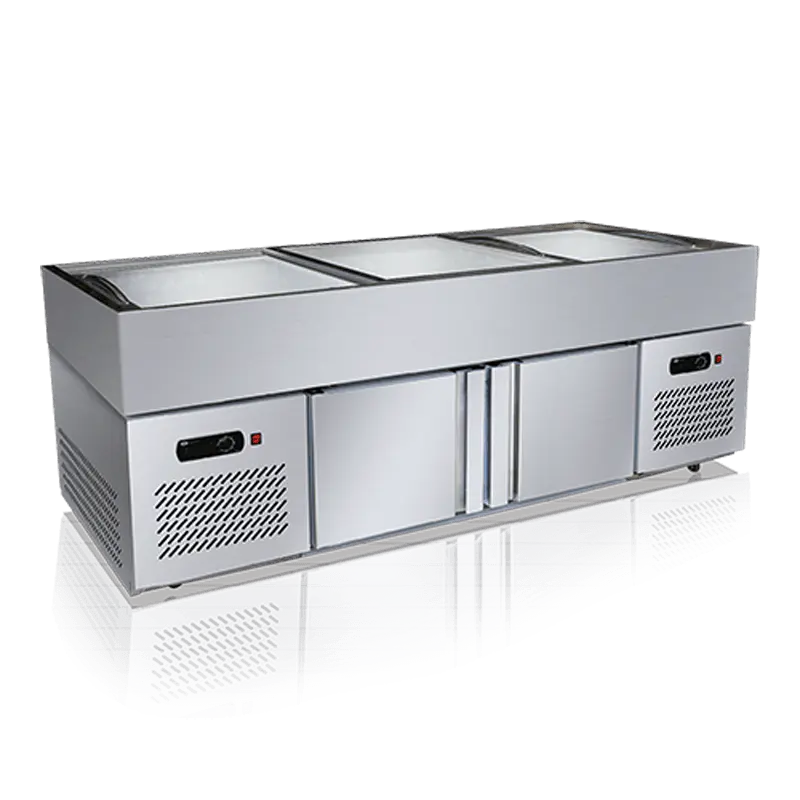
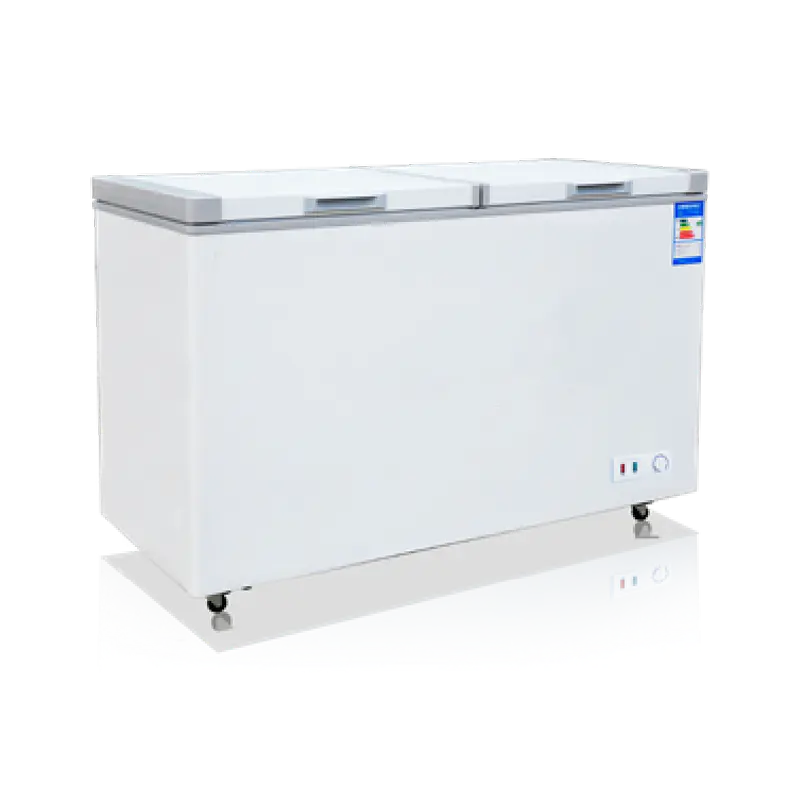
In our manufacturing line, we focus on commercial chest freezer designs with strong insulation and sealing concepts to hold temperature steady during repeated openings. If you want to review the formats we supply (including top-opening and low-temperature options), please see our commercial chest freezer product page.
Control ambient temperature exposure to protect performance
No freezer likes extremes. In hot weather, the refrigeration system runs longer; in very cold weather, some installations can experience unstable cycling if the surrounding air is colder than the control system expects. Your goal is to keep the unit in a “moderate” microclimate even if it is outdoors.
Set your storage target and measure it
For frozen food storage, the practical target used across many operations is 0°F (-18°C) or below. Outdoors, I strongly recommend using a thermometer (or data logger for regulated operations) so you can detect issues early—especially after heat waves, storms, or power interruptions.
Use simple heat-management tactics that actually work
- Place the freezer in permanent shade or under a roof; sun on the lid is one of the fastest ways to raise runtime.
- Avoid placing the cabinet against a hot wall or next to condensers from other equipment.
- Plan for airflow clearance (see the ventilation section below) so heat can leave the compressor area efficiently.
A practical example from field setups: moving a unit from direct afternoon sun to full shade can reduce cabinet heat load immediately, which typically shortens compressor run cycles and helps maintain tighter product temperatures during peak hours.
Build weather protection the right way (no “sealed box” mistakes)
Outdoor chest freezer reliability is less about “waterproofing the freezer” and more about designing a site that blocks rain while allowing heat to escape. The most common failure pattern I see is a tight enclosure that traps hot air—performance drops, energy rises, and components age faster.
A weather hood plus ventilation beats a full wrap
If you need an enclosure, treat it like a small “equipment shelter”: roof, drip edges, and open vents. Do not block the compressor-side airflow. As a rule of thumb, plan at least 4–6 inches (10–15 cm) clearance on the airflow sides and keep vents unobstructed.
Protect the lid seam and the power entry point
- Prevent rain from landing directly on the lid seam and gasket area; water + debris can compromise sealing over time.
- Route the power cord so it does not lie on wet ground; use proper outdoor-rated cable routing and strain relief.
- Elevate the freezer slightly if the site is prone to puddling (standing water is a long-term corrosion risk).
Plan for dust, insects, and salt air if applicable
Outdoor environments bring contaminants that indoor kitchens often avoid. If your site is coastal or dusty, the maintenance frequency should increase (particularly cleaning airflow paths). When buyers tell me they operate near salt air, we discuss cabinet and hardware choices and operational routines that reduce corrosion exposure.
Use outdoor-safe electrical practices (this is non-negotiable)
From a supplier standpoint, most “outdoor freezer problems” that look like refrigeration failures are actually power problems: voltage drop, poor connections, and nuisance trips caused by improper circuits. Outdoors, the electrical standard must be higher than “it turns on.”
Circuit, protection, and connection basics
- Use a properly protected outlet suitable for outdoor environments (for many regions, this means GFCI/RCD protection).
- Avoid long extension cords; if you must run distance, use correctly rated cable to reduce voltage drop and heat.
- Keep plug connections elevated and shielded from splash and rainfall; wet connections create trip events and corrosion.
Account for start-up current
Compressors draw more power at start-up than at steady running. A practical planning rule is that start-up draw can be 3–7× the running current depending on the system. This is why undersized circuits and long cords cause hard starts, tripped protection devices, and temperature instability.
If your operation is sensitive (high-value inventory, regulated storage, or frequent storms), consider backup power planning and temperature logging. It is typically far cheaper than a single product-loss event.
Reduce lid-open time: the simplest way to stabilize outdoor performance
In outdoor placements, warm and humid air enters faster during opening, and that can drive frost and temperature swings. Operational discipline matters as much as equipment selection.
A workflow that consistently improves results
- Decide what you need before opening the lid (pull list first, then open once).
- Store products in lift-out bins or baskets so retrieval is measured in seconds, not minutes.
- Keep a thermometer visible and confirm you are holding 0°F (-18°C) or below after busy service windows.
- Rotate stock using FIFO to prevent long-forgotten items at the bottom becoming waste.
If you want a practical bin-and-zone method you can implement immediately, we published our guide to organizing a chest freezer inside. Even for outside use, organization is a direct lever for better temperature stability and lower frost.
Outdoor maintenance schedule that prevents avoidable failures
Outdoor or semi-outdoor placements need a more disciplined maintenance routine because dust, humidity, and temperature swings accelerate normal wear. I recommend a schedule that is short, repeatable, and assigned to a role—not left as “when we remember.”
Weekly checks (5–10 minutes)
- Wipe the lid gasket contact surface; debris here is a common cause of air leakage.
- Confirm the lid closes squarely and is not obstructed by packaging.
- Verify temperature and log it if your operation requires documentation.
Monthly checks (15–30 minutes)
- Clean ventilation paths and the compressor area (dust buildup reduces heat rejection).
- Inspect the power plug and cable routing for moisture exposure, abrasion, or loose connections.
- Check for early corrosion points and address them before they spread.
When buyers follow this routine, the most common “mystery issues” (temperature drift, frost spikes, nuisance trips) usually reduce dramatically because the root causes are found early.
What I recommend you look for when sourcing a freezer for outside use
When a customer is evaluating a unit for outdoor placement, I focus on a short list of build and usability factors that directly affect outcomes. These are not “marketing features”—they are the items that change real operating cost and reliability.
- Insulation and sealing quality: better insulation and a stronger seal reduce heat gain and improve temperature stability during frequent openings.
- Frost-reduction design: especially important outdoors where humid air intrusion is more frequent.
- Temperature consistency: stable cooling across the cabinet protects product quality and reduces “soft spots” in storage.
- Usability under real workflows: baskets, bin compatibility, and access design that keeps lid-open time short.
In our own chest freezer series, we emphasize robust insulation concepts, sealing structures designed to minimize cold-air leakage, and configurations for different storage needs (including glass-top display formats and low-temperature models). For procurement teams comparing options, this is the right level to evaluate: build fundamentals, workflow fit, and site conditions.
If you would like to match a specific outdoor placement scenario (covered patio, shed, loading zone, coastal environment) with an appropriate configuration, you can start by reviewing our commercial chest freezer product page and then align the selection to the installation principles above.